

What Are the Causes of Acid Reflux?
Acid reflux occurs when stomach acid flows back into the esophagus, causing irritation. The primary cause is a weakened lower esophageal sphincter (LES), which fails to prevent acid from escaping. Other factors like obesity, certain foods, medications, and even stress can contribute to the condition. Understanding the causes of acid reflux is essential for finding the right treatment to manage symptoms and prevent long-term complications. At Digestive Disease Care (DDC), our team of board-certified gastroenterologists provides expert care to help diagnose and treat acid reflux effectively. For more information, contact us today or schedule an appointment online. We are conveniently located at 150 Broadhollow Rd Suite 120-B, Melville, NY 11747.
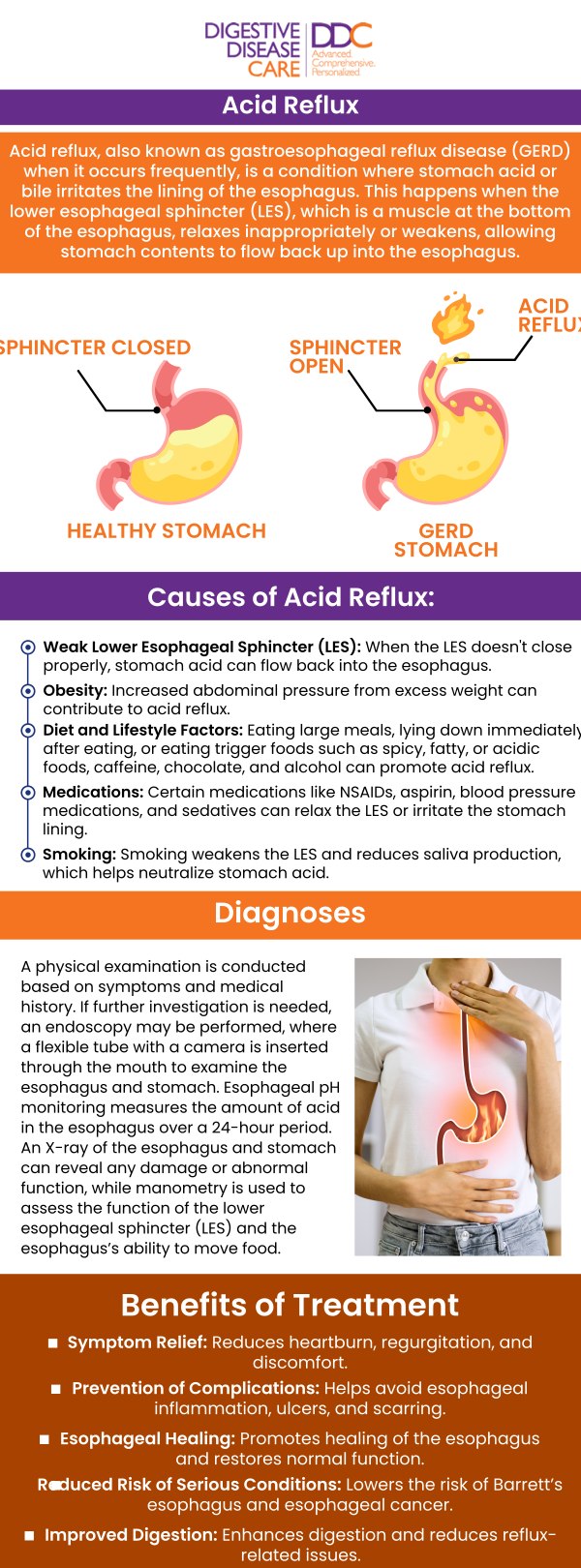
Table of Contents:
What causes acid reflux to occur?
Can stress trigger acid reflux symptoms?
How does the lower esophageal sphincter (LES) contribute to acid reflux?
Can lying down immediately after eating lead to acid reflux?
Explore the Causes of Acid Reflux with Board-Certified Gastroenterologists at Digestive Disease Care (DDC) in Melville, NY
Acid reflux occurs when stomach acid or bile flows back into the esophagus, causing irritation to its lining. This happens when the lower esophageal sphincter (LES), a ring of muscle at the end of the esophagus, fails to close properly. The primary causes of acid reflux include a weakened LES, increased stomach pressure, and lifestyle factors.
Common Causes of Acid Reflux
• Weakened LES: The LES is supposed to act as a barrier, preventing stomach contents from flowing back. When it weakens or relaxes too much, acid can escape into the esophagus.
• Increased Stomach Pressure: Conditions such as obesity, pregnancy, or eating large meals can put pressure on the stomach, forcing acid up into the esophagus.
• Dietary Triggers: Certain foods and beverages—such as spicy foods, citrus, chocolate, coffee, and alcohol—can relax the LES, increasing the likelihood of reflux.
• Hiatal Hernia: A condition where the upper part of the stomach pushes through the diaphragm, making it easier for acid to escape into the esophagus.
• Delayed Stomach Emptying: When food stays in the stomach too long, it can lead to increased acid production, which may contribute to reflux.
Other Contributing Factors
• Medications: Some medications, such as calcium channel blockers, asthma medications, and antihistamines, can relax the LES and promote acid reflux.
• Smoking: Smoking weakens the LES and increases stomach acid production.
• Alcohol Use: Excessive drinking can relax the LES and irritate the esophagus, making reflux more likely.
Managing Acid Reflux
• Lifestyle Modifications: Maintaining a healthy weight, avoiding trigger foods, and eating smaller meals can help prevent reflux.
• Medications: Proton pump inhibitors (PPIs) or antacids may be prescribed to reduce stomach acid and protect the esophagus.
• Surgical Options: In severe cases, surgery may be recommended to strengthen the LES and prevent acid from flowing back into the esophagus.
If acid reflux is frequent or severe, it’s essential to consult with a board-certified gastroenterologist, such as those at Digestive Disease Care (DDC) in Melville, NY, for a personalized treatment plan.
Yes, stress can contribute to the onset of acid reflux symptoms. While stress itself doesn’t directly cause acid reflux, it can exacerbate the condition by affecting both the digestive system and behavior. Stress leads to various physiological changes that can trigger or worsen reflux symptoms.
How Stress Affects Acid Reflux
• Increased Stomach Acid Production: Stress can activate the body’s “fight or flight” response, which increases stomach acid production, making it more likely to flow into the esophagus.
• Behavioral Changes: Stress often leads to poor eating habits, such as eating large, rich meals or consuming foods that trigger reflux. People may also eat quickly or eat late at night, both of which can aggravate acid reflux.
• Gastrointestinal Motility: Stress can slow down the digestive process, leading to a delay in stomach emptying. This can increase the likelihood of reflux, as food stays in the stomach longer, causing it to become more acidic.
• Increased Sensitivity: Chronic stress may also heighten sensitivity to the symptoms of acid reflux, making the discomfort feel more intense.
Managing Stress and Acid Reflux
• Mindfulness Techniques: Practices such as meditation, deep breathing, and yoga can help manage stress and reduce the frequency of reflux symptoms.
• Regular Exercise: Exercise is known to lower stress levels, improve digestion, and maintain a healthy weight, all of which help in controlling acid reflux.
If stress is contributing to your acid reflux, seeking advice from a gastroenterologist can provide strategies to better manage both stress and reflux. At Digestive Disease Care (DDC) in Melville, NY, board-certified specialists can help create a comprehensive treatment plan.
The lower esophageal sphincter (LES) plays a crucial role in preventing acid reflux by acting as a valve between the esophagus and the stomach. The LES is a ring of muscle located at the junction of the esophagus and stomach. When functioning properly, it closes tightly after food enters the stomach, preventing stomach acid from traveling back into the esophagus.
The Role of the LES in Acid Reflux
• Proper Function of the LES: Normally, the LES remains closed to keep stomach contents from refluxing into the esophagus. After swallowing, the LES briefly relaxes to allow food to enter the stomach, and then it tightens again.
• Weakened LES: When the LES weakens or doesn’t close completely, it allows stomach acid and food to flow back into the esophagus, causing irritation and the symptoms of acid reflux.
Factors That Weaken the LES:
• Certain Foods: Fatty, spicy, or acidic foods can relax the LES.
• Medications: Some drugs, including antihistamines and blood pressure medications, can relax the LES.
• Obesity: Increased abdominal pressure can push on the stomach and weaken the LES.
• Hiatal Hernia: A condition where part of the stomach bulges into the chest cavity, which can disrupt LES function.
When LES Dysfunction Causes Acid Reflux
• Chronic Reflux (GERD): A weakened LES is often the cause of persistent acid reflux, leading to chronic conditions such as gastroesophageal reflux disease (GERD).
• Symptoms: The result of LES dysfunction is the backflow of acid into the esophagus, leading to symptoms such as heartburn, regurgitation, difficulty swallowing, and chest pain.
If you experience frequent acid reflux, it may be due to LES dysfunction. At Digestive Disease Care (DDC) in Melville, NY, our board-certified gastroenterologists can help diagnose the cause and recommend treatments to improve LES function.
Yes, lying down immediately after eating can significantly increase the likelihood of acid reflux. When you lie flat, gravity no longer helps keep stomach contents in place, and acid can more easily flow back into the esophagus.
How Lying Down Affects Acid Reflux
• Loss of Gravity’s Effect: After eating, your stomach is full, and the contents are at risk of moving upward into the esophagus if you lie down. This is especially true if the lower esophageal sphincter (LES) is weak.
• Increased Pressure on the Stomach: Lying down increases abdominal pressure, which can force stomach acid to move up into the esophagus. This is particularly problematic for those with a pre-existing weakness in the LES.
• Nighttime Reflux: Lying down at night after dinner can make symptoms of acid reflux worse, contributing to disrupted sleep and more intense symptoms.
How to Prevent Acid Reflux After Eating
• Wait Before Lying Down: It’s recommended to wait at least 2-3 hours after eating before lying down to allow your food to digest properly.
• Sleep with an Elevated Head: If nighttime reflux is a problem, raising the head of the bed by 6 to 8 inches can help prevent acid from flowing back into the esophagus while you sleep.
• Smaller Meals: Eating smaller meals throughout the day can reduce the pressure on the stomach, making it less likely that acid will reflux.
To reduce the risk of acid reflux, avoid lying down right after meals. If reflux symptoms persist, consulting a board-certified gastroenterologist at Digestive Disease Care (DDC) in Melville, NY, can provide guidance and treatment options tailored to your needs.
Explore the causes of acid reflux with board-certified gastroenterologists at Digestive Disease Care (DDC) in Melville, NY. Acid reflux occurs when stomach acid frequently flows back into the esophagus, leading to symptoms such as heartburn, regurgitation, and chest discomfort. Common causes include a weakened lower esophageal sphincter (LES), obesity, certain foods, and medications. Our experienced team at DDC is dedicated to identifying the root cause of your reflux and developing personalized treatment plans to improve your digestive health.
At Digestive Disease Care (DDC), our board-certified gastroenterologists specialize in diagnosing and managing acid reflux, offering advanced diagnostic tools and effective treatment options. Whether your acid reflux is triggered by lifestyle factors or underlying health conditions like GERD or hiatal hernia, we are committed to providing comprehensive care. For more information, contact us today or schedule an appointment online. We are conveniently located at 150 Broadhollow Rd Suite 120-B, Melville, NY 11747. We have convenient locations to serve you in Melville NY, New Hyde Park NY, Forest Hills NY, Jericho NY, Mineola NY, Lake Success NY, Babylon NY, East Setauket NY, Massapequa NY, Riverhead NY and BEYOND.

Check Out Our 5 Star Reviews


Additional Services You May Like

Additional Services You May Like
- Abdominal Pain
- Acid Reflux
- Barretts Esophagus
- Bloating
- Capsule Endoscopy
- Celiac Disease
- Colon Cancer Screening
- Colonoscopy
- Constipation
- Crohns Disease
- Diarrhea
- Diverticulitis
- Esophageal PH Monitoring
- Fatty Liver
- Fibroscan
- Gallstones
- Gastroenterologist
- Gastric Chest Pain
- Gluten Intolerance
- Hemorrhoid
- Hemorrhoid Banding
- Hepatitis
- Irritable Bowel Syndrome
- Lactose Intolerance
- Pancreatitis
- Polyps
- Rectal Bleeding
- Stomach
- Ulcerative Colitis
- GI Urgent Care


 Send Text
 How May I Help You?