

What Are the Symptoms of Acid Reflux?
The symptoms of acid reflux often include heartburn, a burning sensation in the chest, and regurgitation, where stomach acid rises into the throat. You may also experience difficulty swallowing, a chronic cough, or a sore throat. Some individuals may notice a sour or bitter taste in their mouth. If these symptoms occur frequently, it’s important to consult a specialist for proper diagnosis and management. At Digestive Disease Care (DDC), our team of board-certified gastroenterologists can provide care tailored to your needs. For more information, contact us or schedule an appointment. We are conveniently located at 366 N Broadway Suite, LW-2-B, Jericho, NY 11753.
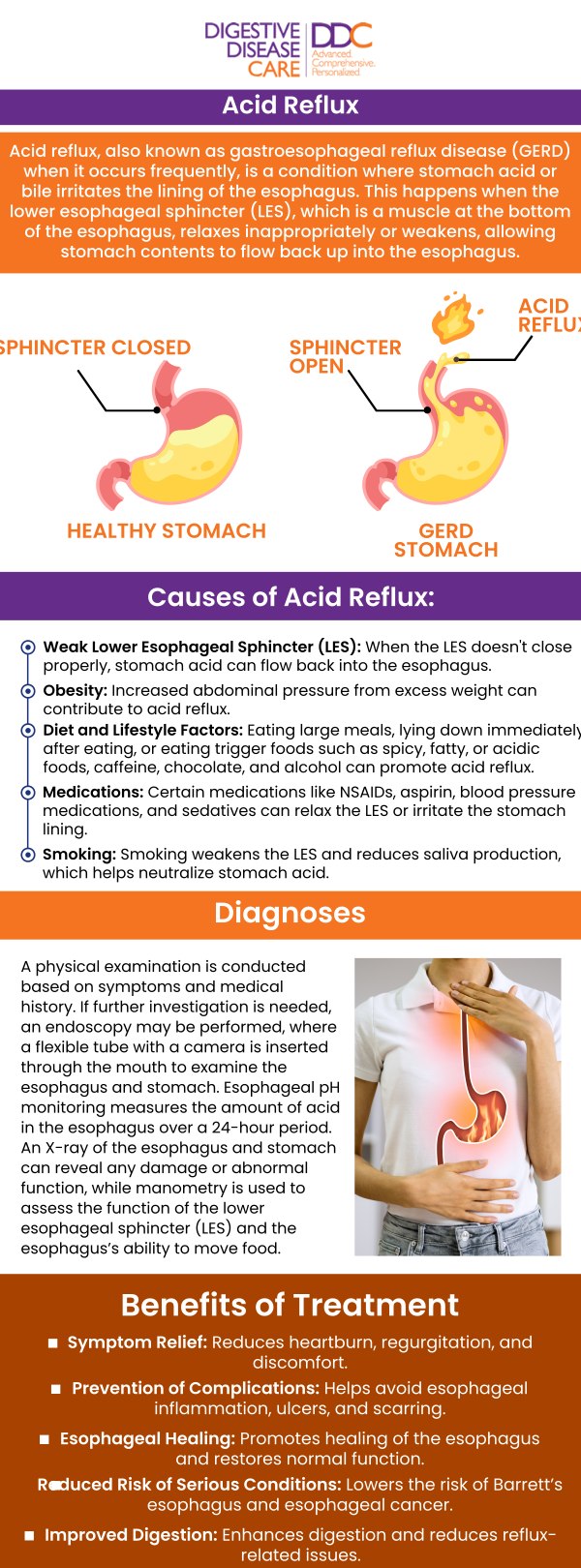
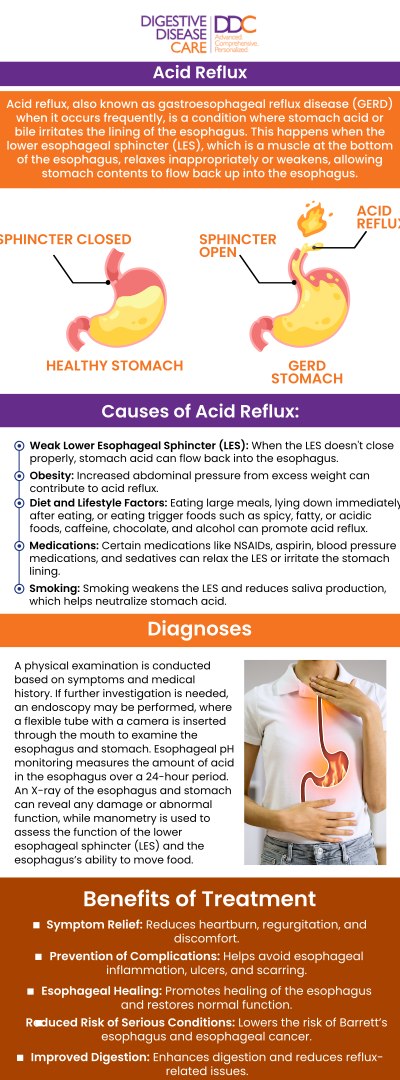
Table of Contents:
What are the most common symptoms of acid reflux?
Can acid reflux cause a sore throat or hoarseness?
What should I do if I experience frequent acid reflux symptoms?
How long can acid reflux symptoms last?
Board-Certified Gastroenterologists at Digestive Disease Care (DDC) in Jericho, NY: Diagnosing Acid Reflux Symptoms
Acid reflux occurs when stomach acid flows back into the esophagus, leading to irritation and discomfort. When this happens frequently, it may indicate Gastroesophageal Reflux Disease. Recognizing the symptoms early helps prevent complications and allows for timely evaluation.
Primary Symptoms of Acid Reflux
• Heartburn: A burning sensation in the chest, often after meals or when lying down
• Regurgitation: Sour or bitter-tasting acid backing up into the throat or mouth
• Chest Discomfort: Pressure or pain behind the breastbone that may mimic cardiac issues
• Difficulty Swallowing: Sensation of food getting stuck or delayed while swallowing
Upper Airway and Throat Symptoms
• Chronic Cough: Persistent coughing without a clear respiratory cause
• Throat Irritation: Burning or scratchy feeling in the throat
• Hoarseness: Changes in voice, especially in the morning
• Postnasal Drip Sensation: Feeling of mucus collecting in the throat
Digestive and Secondary Symptoms
• Bloating or Fullness: Feeling overly full after eating small amounts
• Nausea: Mild queasiness associated with reflux episodes
• Frequent Burping: Increased belching due to swallowed air or digestive imbalance
When Symptoms Become Concerning
• Symptoms occurring multiple times per week
• Nighttime reflux is disrupting sleep
• Persistent discomfort despite lifestyle adjustments
Understanding these common symptoms can help individuals identify patterns and seek appropriate evaluation before the condition progresses.
Yes, acid reflux can affect more than just the stomach and esophagus. When acid travels upward into the throat, it can irritate the vocal cords and surrounding tissues. This condition is often associated with Laryngopharyngeal Reflux, sometimes called “silent reflux” because it may occur without typical heartburn.
How Acid Reflux Affects the Throat
• Acid Exposure: Stomach acid reaches the throat and larynx, causing irritation
• Inflammation: Sensitive tissues become swollen and irritated
• Vocal Cord Impact: Repeated exposure affects voice quality
Common Throat-Related Symptoms
• Sore Throat: Persistent discomfort not linked to infection
• Hoarseness: Raspy or weak voice, especially in the morning
• Frequent Throat Clearing: Ongoing need to clear the throat
• Sensation of a Lump: Feeling like something is stuck in the throat
Why These Symptoms Occur
• The throat lacks the protective lining found in the stomach
• Even small amounts of acid can cause irritation
• Symptoms may worsen at night or after meals
When to Seek Evaluation
• Symptoms lasting several weeks
• Voice changes affecting daily communication
• Persistent throat discomfort without improvement
Recognizing these signs helps distinguish reflux-related throat issues from infections or allergies, guiding appropriate care.
Frequent acid reflux should not be ignored, as it may indicate an ongoing digestive issue requiring evaluation. Taking early steps can help reduce discomfort and prevent complications associated with chronic reflux.
Lifestyle Adjustments to Consider
• Modify Eating Habits: Eat smaller, more frequent meals
• Avoid Trigger Foods: Limit spicy, fatty, or acidic foods
• Stay Upright After Eating: Avoid lying down for at least 2–3 hours
• Maintain a Healthy Weight: Reduces pressure on the stomach
Daily Habits That May Help
• Elevate Head During Sleep: Helps prevent nighttime reflux
• Reduce Late-Night Eating: Avoid meals close to bedtime
• Manage Stress: Stress may worsen digestive symptoms
• Wear Loose Clothing: Prevents pressure on the abdomen
When to Seek Medical Evaluation
• Symptoms occurring more than twice a week
• Persistent discomfort affecting daily activities
• Difficulty swallowing or unexplained weight loss
• Ongoing throat or respiratory symptoms
Role of a Specialist
• Consulting a provider trained in Gastroenterology allows for:
• Accurate diagnosis of underlying causes
• Evaluation of esophageal health
• Development of a personalized management plan
Addressing frequent symptoms early supports long-term digestive health and helps prevent progression.
The duration of acid reflux symptoms can vary depending on the cause, severity, and individual lifestyle factors. Occasional reflux episodes may last only a short time, while chronic conditions can lead to prolonged or recurring symptoms.
Short-Term Acid Reflux
• Symptoms may last a few minutes to a couple of hours
• Often triggered by specific foods or large meals
• Usually resolves with simple lifestyle adjustments
Chronic or Recurring Reflux
• Symptoms may persist for weeks or months
• Occur multiple times per week
• Often linked to Gastroesophageal Reflux Disease
Factors That Influence Duration
• Diet Choices: Spicy or fatty foods may prolong symptoms
• Body Position: Lying down can worsen reflux
• Stress Levels: Can contribute to digestive discomfort
• Underlying Conditions: May extend symptom duration
Signs and Symptoms May Be Long-Lasting
• Daily or near-daily heartburn
• Nighttime symptoms affecting sleep
• Ongoing throat irritation or cough
When to Seek Help
• Symptoms lasting longer than a few weeks
• Increasing severity or frequency
• Difficulty swallowing or persistent discomfort
Understanding how long symptoms last can help determine whether reflux is occasional or part of a chronic condition requiring further evaluation.
At Digestive Disease Care in Jericho, NY, patients receive a comprehensive evaluation for acid reflux and related digestive concerns. The focus is on identifying the root cause of symptoms and creating an individualized plan for long-term relief.
Comprehensive Evaluation Approach
• Detailed review of symptoms and medical history
• Assessment of lifestyle and dietary factors
• Use of advanced diagnostic tools when needed
What Patients Can Expect
• Personalized care tailored to symptom severity
• Monitoring of esophageal health over time
• Guidance on managing and reducing symptoms
Benefits of Specialized Care
• Early detection of complications
• Improved symptom control and comfort
• Support for long-term digestive wellness
Why Choose DDC in Jericho, NY
• Board-certified specialists with digestive health expertise
• Patient-focused approach to diagnosis and care
• Commitment to improving quality of life
Seeking care at DDC allows individuals to better understand their symptoms, receive an accurate evaluation, and take steps toward lasting relief from acid reflux. For more information, contact us or schedule an appointment. We are conveniently located at366 N Broadway Suite, LW-2-B, Jericho, NY 11753. We serve patients from Jericho NY, Plainview NY, Mineola NY, Levittown NY, Farmingdale NY, Syosset NY, and surrounding areas.

Check Out Our 5 Star Reviews


Additional Services You May Like

Additional Services You May Like
- Abdominal Pain
- Acid Reflux
- Barretts Esophagus
- Bloating
- Capsule Endoscopy
- Celiac Disease
- Colon Cancer Screening
- Colonoscopy
- Constipation
- Crohns Disease
- Diarrhea
- Diverticulitis
- Esophageal PH Monitoring
- Fatty Liver
- Fibroscan
- Gallstones
- Gastroenterologist
- Gastric Chest Pain
- Gluten Intolerance
- Hemorrhoid
- Hemorrhoid Banding
- Hepatitis
- Irritable Bowel Syndrome
- Lactose Intolerance
- Pancreatitis
- Polyps
- Rectal Bleeding
- Stomach
- Ulcerative Colitis
- GI Urgent Care


 Send Text
 How May I Help You?