

Which Gastroenterologists Offer Acid Reflux Treatment in Mineola, NY?
Acid reflux occurs when stomach acid flows back into the esophagus, causing discomfort, heartburn, and occasional chest pain. At Digestive Disease Care in Mineola, NY, our board-certified gastroenterologists provide evaluation, personalized treatment, and guidance to manage reflux, GERD, and other digestive issues for long-term comfort and health. For more information, contact us today or book an appointment online. We are conveniently located at 137 Willis Ave Suite 110 2nd Floor, Mineola, NY 11501.
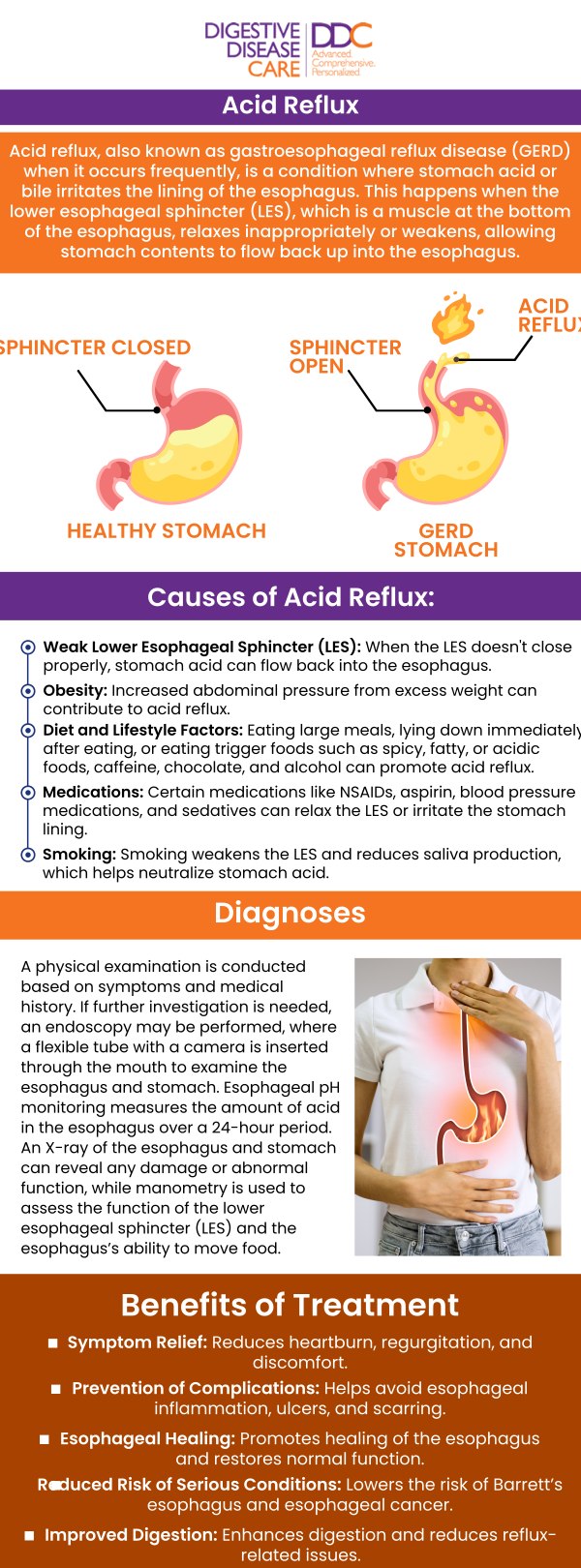
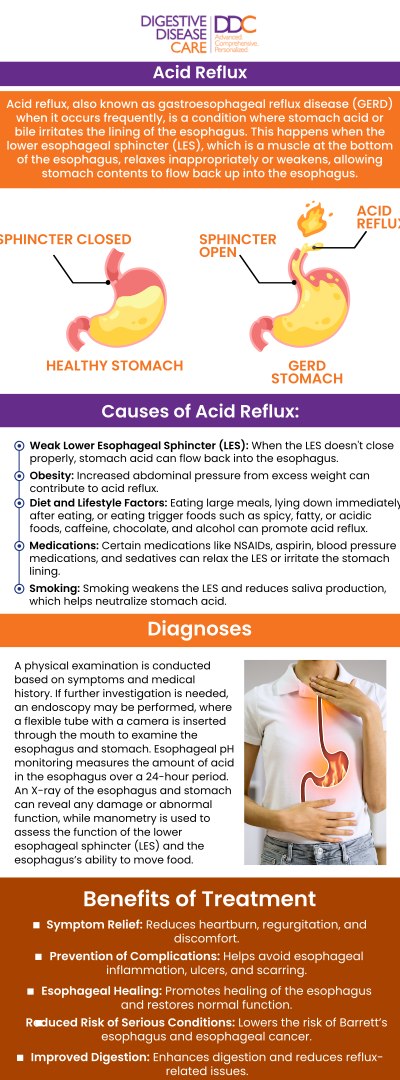
Table of Contents:
Can acid reflux happen at night?
Can acid reflux cause nausea or bloating?
What happens if acid reflux is not treated?
How often is acid reflux considered a concern?
Board-Certified Gastroenterologists at Digestive Disease Care (DDC) for Acid Reflux Treatment in Mineola, NY
Acid reflux can occur at any time, including nighttime, and often becomes more noticeable when lying down. Nighttime reflux can significantly affect sleep quality and overall comfort.
Body Position During Sleep
Lying flat makes it easier for stomach acid to flow back into the esophagus, especially if the lower esophageal sphincter (LES) is weakened or relaxes inappropriately.
Late or Large Meals
Eating heavy or late-night meals increases stomach pressure and prolongs acid exposure, making reflux more likely during the night.
Alcohol or Caffeine Intake
Consuming alcohol or caffeine close to bedtime relaxes the LES, further increasing the risk of nocturnal reflux.
Hiatal Hernia
Patients with a hiatal hernia may experience more frequent nighttime acid reflux due to altered anatomy that allows acid to escape more easily.
Impact on Sleep
Nighttime acid reflux can lead to disrupted sleep, coughing, throat irritation, or a sour taste upon waking.
Long-Term Risks
Chronic nighttime reflux may contribute to esophagitis, Barrett’s esophagus, or dental erosion if left untreated.
Preventive Measures
Elevating the head of the bed, avoiding late meals, and limiting trigger foods can reduce nighttime symptoms.
Professional Care
A board-certified gastroenterologist at Digestive Disease Care can assess the frequency and severity of nighttime reflux and recommend treatment or lifestyle adjustments.
Monitoring Symptoms
Keeping a symptom diary can help identify patterns and triggers specific to nighttime reflux.
Treatment Options
Medications may be prescribed to reduce nighttime acid production and protect the esophagus.
Yes, acid reflux frequently causes additional digestive symptoms such as nausea and bloating, often linked to the underlying irritation in the stomach and esophagus.
Esophageal Irritation
Stomach acid that backs up into the esophagus can trigger nausea due to irritation of nerve endings in the gastrointestinal tract.
Delayed Stomach Emptying
Acid reflux may slow gastric emptying, which can lead to a feeling of fullness, pressure, or bloating.
Food Intolerance
Certain foods trigger both reflux and bloating, including fatty, fried, or highly processed items.
Overeating
Large meals increase stomach pressure and can exacerbate both reflux and nausea.
Coexisting Conditions
Patients with GERD may also have irritable bowel syndrome (IBS) or dyspepsia, compounding bloating and nausea symptoms.
Trigger Awareness
Identifying foods or behaviors that precipitate nausea or bloating helps manage symptoms.
Impact on Daily Life
Persistent nausea and bloating can reduce appetite, disrupt sleep, and impair overall quality of life.
Medical Evaluation
A board-certified gastroenterologist at Digestive Disease Care can determine if symptoms are purely reflux-related or if other digestive disorders are contributing.
Treatment Strategies
Management may include dietary adjustments, medications to reduce acid production, and lifestyle modifications such as meal timing and posture.
Preventive Measures
Avoiding late-night meals, limiting trigger foods, and maintaining an upright position after eating can reduce nausea and bloating.
Untreated acid reflux can lead to serious complications affecting the esophagus, teeth, and overall digestive health.
Esophagitis
Repeated acid exposure inflames the esophageal lining, causing pain, irritation, and difficulty swallowing.
Strictures
Chronic inflammation may lead to scar tissue formation, narrowing the esophagus and making swallowing more difficult.
Barrett’s Esophagus
Long-term acid damage can change esophageal cells, increasing the risk of esophageal cancer.
Dental Erosion
Acid reflux can erode tooth enamel, leading to increased sensitivity and dental decay.
Chronic Cough or Throat Irritation
Acid reaching the throat may cause persistent cough, hoarseness, or a sensation of a lump in the throat.
Sleep Disruption
Nighttime reflux may impair sleep quality, contributing to fatigue and reduced quality of life.
Malnutrition
Painful swallowing or persistent nausea may cause reduced food intake and nutrient deficiencies.
Medication Dependence
Over time, untreated reflux may require higher doses or long-term medication for symptom control.
Increased Risk of Complications
Untreated reflux can exacerbate other digestive conditions, such as peptic ulcers or gastritis.
Importance of Medical Care
Consulting a board-certified gastroenterologist at Digestive Disease Care ensures early intervention to prevent complications and improve digestive health.
Acid reflux is common, but the frequency and severity of symptoms determine when it becomes a medical concern. Occasional heartburn after a large meal may not require medical attention, but repeated episodes can indicate gastroesophageal reflux disease (GERD).
Occasional vs. Chronic Symptoms
Mild, infrequent reflux may happen once or twice a month and is generally manageable with lifestyle changes. Frequent reflux — several times per week or daily — warrants evaluation.
Severity of Symptoms
Persistent burning, regurgitation, or chest discomfort is a sign that the reflux is more than occasional and may affect quality of life.
Nighttime Reflux
Experiencing reflux at night or while lying down increases concern because it can disrupt sleep and worsen esophageal irritation.
Impact on Daily Life
If symptoms interfere with work, meals, or sleep, acid reflux should be evaluated, regardless of frequency.
Associated Complications
Warning signs such as difficulty swallowing, vomiting blood, unexplained weight loss, or chronic cough indicate that reflux is a significant medical concern.
Long-Term Risk
Untreated frequent reflux can lead to esophagitis, strictures, or Barrett’s esophagus, highlighting the importance of timely evaluation.
Lifestyle Factors
Frequent reflux despite diet modifications, weight management, and avoiding trigger foods signals a need for professional care.
When to Seek Help
Anyone experiencing heartburn more than twice a week, or with new or worsening symptoms, should consult a gastroenterologist.
Role of Professional Monitoring
Regular monitoring helps prevent complications, guide treatment, and improve symptom management.
Importance of Early Intervention
Addressing reflux early with professional guidance reduces long-term risks and improves digestive health outcomes.
Digestive Disease Care (DDC) in Mineola, NY, offers specialized evaluation and treatment for patients experiencing acid reflux and GERD. Our board-certified gastroenterologists provide thorough assessments, including detailed medical history, diagnostic testing, and esophageal evaluation, to determine the underlying causes of reflux. By identifying triggers, severity, and potential complications, we develop personalized treatment plans tailored to each patient’s needs.
Treatment at DDC may include lifestyle counseling, dietary modifications, medications to reduce acid production, and advanced procedural options for severe or persistent cases. Our team emphasizes patient education, follow-up care, and symptom management to improve quality of life. With a focus on comprehensive, patient-centered care, Digestive Disease Care ensures that individuals in Mineola, NY, receive expert support for long-term digestive health. For more information, contact us today or book an appointment online. We are conveniently located at 137 Willis Ave Suite 110 2nd Floor, Mineola, NY 11501. We serve patients from Mineola NY, Uniondale NY, Queens NY, Floral Park NY, Roslyn NY, Plainview NY, and surrounding areas.

Check Out Our 5 Star Reviews


Additional Services You May Like

Additional Services You May Like
- Abdominal Pain
- Acid Reflux
- Barretts Esophagus
- Bloating
- Capsule Endoscopy
- Celiac Disease
- Colon Cancer Screening
- Colonoscopy
- Constipation
- Crohns Disease
- Diarrhea
- Diverticulitis
- Esophageal PH Monitoring
- Fatty Liver
- Fibroscan
- Gallstones
- Gastroenterologist
- Gastric Chest Pain
- Gluten Intolerance
- Hemorrhoid
- Hemorrhoid Banding
- Hepatitis
- Irritable Bowel Syndrome
- Lactose Intolerance
- Pancreatitis
- Polyps
- Rectal Bleeding
- Stomach
- Ulcerative Colitis
- GI Urgent Care


 Send Text
 How May I Help You?