

Can Constipation Cause Breathing Problems?
Severe constipation can sometimes cause abdominal bloating and pressure that makes breathing feel uncomfortable, especially when the abdomen becomes significantly distended. Stool and gas buildup may increase pressure beneath the diaphragm, making it harder to take a deep or satisfying breath. However, persistent or significant shortness of breath should not automatically be blamed on constipation because other medical conditions may be responsible. At Digestive Disease Care, our board-certified gastroenterologists evaluate constipation and related digestive symptoms to help determine the underlying cause and appropriate care. For more information, contact us today or schedule an appointment online. We are conveniently located at 1991 Marcus Ave, Suite M200, Lake Success, NY 11042.
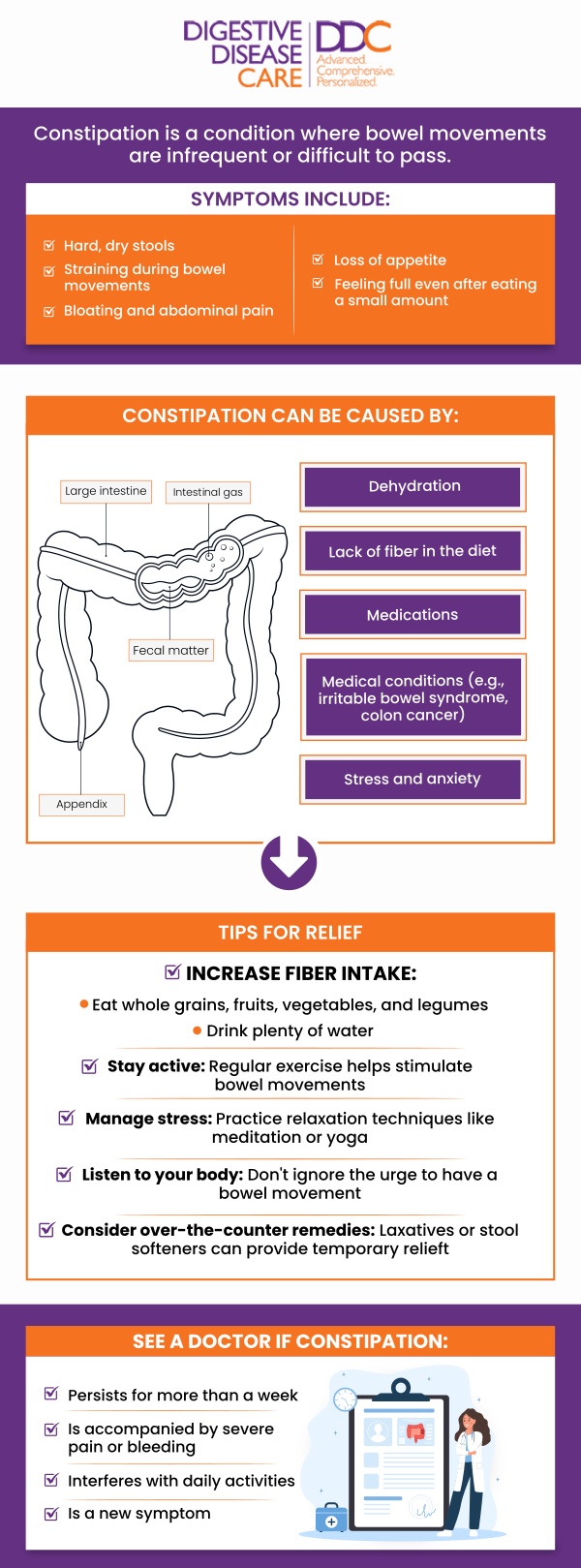
Table of Contents:
How can severe constipation make breathing feel uncomfortable?
Can abdominal bloating from constipation affect the diaphragm?
What other symptoms may occur with severe constipation?
When should constipation with breathing discomfort be evaluated by a doctor?
At Digestive Disease Care, Our Board-Certified Gastroenterologists Evaluate Constipation and Related Digestive Symptoms in Lake Success, NY
Severe constipation can sometimes contribute to abdominal pressure, fullness, and bloating that may make breathing feel uncomfortable. When stool remains in the colon for an extended period, the bowel can become distended, and trapped gas may add additional pressure within the abdomen.
As abdominal pressure increases, some people may feel that taking a full or deep breath requires more effort. This sensation may become more noticeable after meals, while sitting in certain positions, or when bloating is especially severe. However, significant or persistent shortness of breath should not automatically be attributed to constipation because breathing problems can have many other causes.
Constipation-related discomfort may include:
• Increased abdominal fullness
• Abdominal pressure or tightness
• Bloating and visible distention
• Excess intestinal gas
• Cramping or discomfort
• Straining during bowel movements
• A feeling of incomplete bowel emptying
• Reduced appetite because of fullness
If breathing difficulty is severe, suddenly worsens, occurs with chest pain, fainting, sweating, or other concerning symptoms, prompt medical evaluation is important.
Yes, severe abdominal bloating or distention may place additional pressure beneath the diaphragm. The diaphragm is the main muscle involved in breathing and separates the chest cavity from the abdominal cavity. When the abdomen becomes significantly distended, movement of the diaphragm may feel somewhat restricted.
Constipation can contribute to this pressure when stool and gas accumulate in the intestines. Some individuals may notice difficulty taking a satisfying deep breath, particularly when abdominal bloating is pronounced.
Symptoms associated with significant abdominal distention may include:
• Tightness across the abdomen
• A feeling of excessive fullness
• Visible abdominal swelling
• Pressure beneath the ribs
• Discomfort when bending or sitting
• Increased fullness after eating
• Difficulty getting comfortable while lying down
• A sensation that deep breathing is more difficult
Breathing discomfort related to bloating should generally improve as abdominal pressure decreases. Persistent, unexplained, or significant shortness of breath should be evaluated because heart, lung, and other medical conditions can also cause breathing difficulty.
Severe constipation can cause more than simply having fewer bowel movements. Symptoms may become more noticeable as stool becomes harder, drier, or increasingly difficult to pass.
Common symptoms may include:
• Hard or dry stools: Stool may become difficult or uncomfortable to pass.
• Infrequent bowel movements: A person may have considerably fewer bowel movements than usual.
• Excessive straining: Significant effort may be required during bowel movements.
• Abdominal pain or cramping: Stool and gas buildup can create pressure and discomfort.
• Bloating: The abdomen may feel unusually full, tight, or swollen.
• Excess gas: Slower bowel movements may contribute to increased gas.
• Incomplete evacuation: A person may continue to feel that stool remains after using the bathroom.
• Rectal discomfort: Hard stools and repeated straining may irritate.
• Reduced appetite: Persistent fullness may make eating uncomfortable.
• Nausea: Severe constipation may occasionally be accompanied by nausea.
Persistent constipation may have several possible causes, including inadequate fiber or fluid intake, limited physical activity, certain medications, pelvic floor problems, metabolic conditions, or other digestive disorders.
Severe abdominal swelling combined with persistent vomiting, intense abdominal pain, or an inability to pass stool or gas may indicate a more serious digestive problem and should receive prompt medical evaluation.
Constipation accompanied by breathing discomfort should be evaluated when symptoms are persistent, worsening, severe, or noticeably different from a person’s normal bowel habits. Breathing difficulty is particularly important to assess because it may be caused by something other than constipation.
Medical evaluation may be appropriate when constipation occurs with:
• Persistent or worsening abdominal pain
• Significant abdominal bloating or swelling
• Recurrent nausea or vomiting
• Blood in the stool
• Rectal bleeding
• Unexplained weight loss
• Persistent changes in bowel habits
• Increasing difficulty passing stool
• Repeated episodes of severe constipation
• New or persistent breathing discomfort
• Symptoms that do not improve with usual measures
Urgent medical attention may be necessary if constipation is accompanied by severe abdominal pain, repeated vomiting, pronounced abdominal swelling, inability to pass stool or gas, chest pain, fainting, or significant shortness of breath.
A gastroenterologist can evaluate bowel habits, diet, medications, medical history, abdominal symptoms, and other possible contributing factors to determine whether additional testing or treatment may be needed.
At Digestive Disease Care, our board-certified gastroenterologists provide personalized evaluation for patients experiencing constipation, abdominal bloating, pressure, and related digestive symptoms in Lake Success, NY. Our team considers bowel movement frequency, stool consistency, duration of symptoms, abdominal discomfort, medications, dietary habits, medical history, and other factors that may contribute to constipation.
Our evaluation may include:
• Reviewing persistent or recurring constipation
• Assessing abdominal bloating and distention
• Evaluating changes in bowel movement frequency
• Reviewing changes in stool consistency
• Investigating abdominal pain or pressure
• Assessing symptoms of incomplete bowel emptying
• Reviewing medications that may contribute to constipation
• Identifying warning signs that may require additional testing
• Determining whether further digestive evaluation is appropriate
• Developing an individualized approach to constipation management
• Providing guidance for supporting regular bowel function
Constipation is common, but severe or persistent symptoms should not be ignored, especially when significant abdominal swelling or breathing discomfort occurs. At Digestive Disease Care, our board-certified gastroenterologists work with patients in Lake Success, NY, to identify possible causes of constipation, evaluate related digestive symptoms, and provide personalized care based on each patient’s needs. For more information, contact us today or schedule an appointment online. We are conveniently located at 1991 Marcus Ave, Suite M200, Lake Success, NY 11042. We serve patients from Lake Success, NY, Queens, NY, Hempstead NY, Roslyn NY, Jericho NY, Westbury NY, and surrounding areas.

Check Out Our 5 Star Reviews


Additional Services You May Like

Additional Services You May Like
- Abdominal Pain
- Acid Reflux
- Barretts Esophagus
- Bloating
- Capsule Endoscopy
- Celiac Disease
- Colon Cancer Screening
- Colonoscopy
- Constipation
- Crohns Disease
- Diarrhea
- Diverticulitis
- Esophageal PH Monitoring
- Fatty Liver
- Fibroscan
- Gallstones
- Gastroenterologist
- Gastric Chest Pain
- Gluten Intolerance
- Hemorrhoid
- Hemorrhoid Banding
- Hepatitis
- Irritable Bowel Syndrome
- Lactose Intolerance
- Pancreatitis
- Polyps
- Rectal Bleeding
- Stomach
- Ulcerative Colitis
- GI Urgent Care


 Send Text
 How May I Help You?