

Fatty Liver Disease vs. Cirrhosis: What Is the Difference?
Fatty liver disease occurs when excess fat builds up in liver cells, while cirrhosis is a more advanced condition involving extensive liver scarring. Fatty liver disease may cause few or no symptoms at first, whereas cirrhosis can lead to more serious changes in liver function over time. In some patients, ongoing liver inflammation and fibrosis may allow fatty liver disease to progress toward cirrhosis. At Digestive Disease Care, our board-certified gastroenterologists evaluate liver health and provide personalized care for fatty liver disease, fibrosis, and cirrhosis. For more information, contact us or schedule an appointment. We are conveniently located at 366 N Broadway Suite LW-2-B, Jericho, NY 11753.
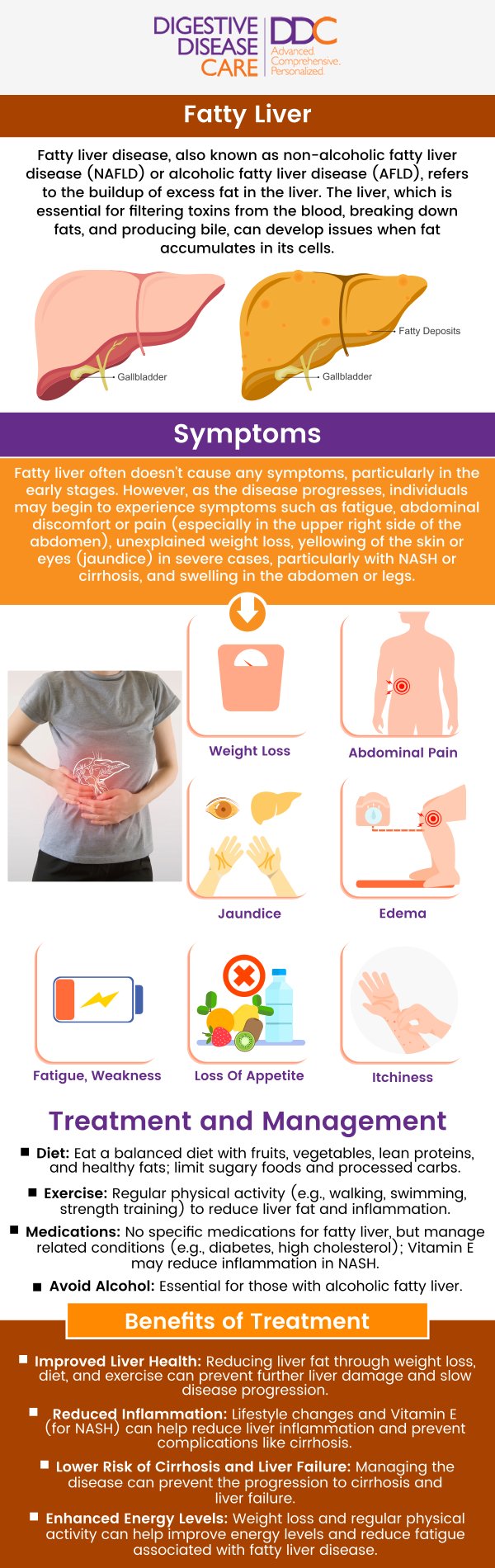
Table of Contents:
How is fatty liver disease different from cirrhosis?
Can fatty liver disease progress to cirrhosis?
Do fatty liver disease and cirrhosis cause different symptoms?
How are fatty liver disease and cirrhosis diagnosed?
At Digestive Disease Care, Our Board-Certified Gastroenterologists Diagnose and Manage Fatty Liver Disease and Cirrhosis in Jericho, NY
Fatty liver disease and cirrhosis are different forms or stages of liver damage. Fatty liver disease occurs when excess fat builds up in liver cells. In some people, fat accumulation may remain relatively mild, while others develop inflammation and liver-cell damage that can increase the risk of scarring over time.
Cirrhosis is advanced scarring of the liver. It develops after long-term liver damage causes healthy liver tissue to be replaced by scar tissue. As scarring progresses, the liver may have increasing difficulty performing essential functions such as filtering blood, processing nutrients, and producing important proteins.
Important differences include:
• Fatty liver disease: Primarily involves excess fat accumulation in liver cells.
• Liver inflammation: Some patients develop inflammation along with liver fat.
• Fibrosis: Scar tissue begins to form as liver damage progresses.
• Cirrhosis: Represents advanced and extensive liver scarring.
• Liver function: Early fatty liver disease may have little effect on liver function, while advanced cirrhosis can significantly impair it.
Because fatty liver disease may develop without obvious symptoms, identifying liver changes early can help determine whether inflammation or fibrosis is present and whether additional monitoring is needed.
Yes. Fatty liver disease can progress to cirrhosis in some people, although not everyone with fatty liver disease will develop severe liver damage. Progression usually occurs gradually when ongoing inflammation causes repeated injury to liver cells.
Over time, chronic inflammation may lead to fibrosis. As fibrosis becomes more extensive, the liver can become increasingly scarred and eventually develop cirrhosis. The rate of progression varies considerably depending on individual health factors and the presence of other liver-related risks.
Factors that may increase the likelihood of progression include:
• Excess body weight or obesity
• Type 2 diabetes
• Insulin resistance
• High triglycerides or abnormal cholesterol levels
• High blood pressure
• Metabolic syndrome
• Persistent liver inflammation
• Alcohol consumption
• Other chronic liver conditions
• Increasing levels of liver fibrosis
Regular monitoring can help identify whether fatty liver disease is remaining stable or progressing. Managing metabolic conditions, maintaining a healthy weight, following medical recommendations, and monitoring liver health may help reduce the risk of advanced liver damage.
Yes, although both conditions may cause few or no noticeable symptoms in their earlier stages. Fatty liver disease is often discovered during routine blood tests or imaging performed for another health concern.
Possible symptoms associated with fatty liver disease may include:
• Fatigue
• Low energy
• Mild discomfort in the upper right abdomen
• General weakness
• Few or no noticeable symptoms
Cirrhosis may also remain relatively silent at first. However, as liver scarring becomes more advanced and normal liver function declines, symptoms can become more noticeable.
Possible symptoms of advanced cirrhosis may include:
• Persistent fatigue or weakness
• Reduced appetite
• Unintended weight loss
• Nausea
• Itchy skin
• Yellowing of the skin or eyes
• Swelling in the legs, ankles, or feet
• Fluid buildup in the abdomen
• Easy bruising or bleeding
• Confusion or difficulty concentrating
• Muscle loss or weakness
The absence of symptoms does not always indicate mild liver disease. Significant fibrosis or cirrhosis can sometimes develop before obvious symptoms appear, which is why appropriate testing and medical follow-up can be important for people with liver disease risk factors.
Diagnosing fatty liver disease or cirrhosis usually involves a combination of medical history, physical examination, blood testing, and imaging studies. These evaluations can help determine whether liver fat, inflammation, fibrosis, or advanced scarring is present.
Evaluation may include:
• Medical history: A gastroenterologist may review weight changes, diabetes, cholesterol levels, alcohol use, medications, family history, and other liver-related risk factors.
• Blood tests: Liver enzymes and other laboratory values can help assess liver function and identify possible abnormalities.
• Ultrasound: Imaging may reveal excess liver fat or structural changes.
• Fibrosis assessment: Blood-based calculations and specialized imaging may help estimate the degree of liver scarring.
• CT or MRI: Additional imaging may be used when more detailed evaluation is necessary.
• Liver biopsy: In selected cases, a tissue sample may be used to confirm the diagnosis or determine the severity of inflammation and scarring.
When cirrhosis is suspected, additional testing may be performed to evaluate liver function and look for complications associated with advanced liver disease. The appropriate diagnostic approach depends on the patient’s symptoms, risk factors, previous test results, and overall health.
At Digestive Disease Care, our board-certified gastroenterologists provide individualized evaluation and management for patients with fatty liver disease, abnormal liver tests, liver fibrosis, or cirrhosis in Jericho, NY. Our team considers each patient’s medical history, metabolic risk factors, symptoms, previous testing, alcohol exposure, medications, and other factors that may affect liver health.
Our liver disease evaluation and management may include:
• Reviewing abnormal liver enzyme results
• Assessing risk factors for fatty liver disease
• Evaluating symptoms associated with chronic liver disease
• Determining whether liver imaging may be appropriate
• Assessing the likelihood and severity of liver fibrosis
• Monitoring patients with established cirrhosis
• Evaluating metabolic conditions that may affect liver health
• Identifying signs of possible disease progression
• Recommending appropriate follow-up and monitoring
• Developing an individualized plan for long-term liver care
Fatty liver disease and cirrhosis are different conditions, but progressive fatty liver disease can eventually contribute to significant fibrosis and cirrhosis in some patients. At Digestive Disease Care, our board-certified gastroenterologists work with patients in Jericho, NY, to identify liver disease, determine its severity, monitor changes over time, and provide personalized care focused on long-term liver health. For more information, contact us or schedule an appointment. We are conveniently located at 366 N Broadway Suite LW-2-B, Jericho, NY 11753. We serve patients from Jericho NY, Plainview NY, Mineola NY, Levittown NY, Farmingdale NY, Syosset NY, and surrounding areas.

Check Out Our 5 Star Reviews


Additional Services You May Like

Additional Services You May Like
- Abdominal Pain
- Acid Reflux
- Barretts Esophagus
- Bloating
- Capsule Endoscopy
- Celiac Disease
- Colon Cancer Screening
- Colonoscopy
- Constipation
- Crohns Disease
- Diarrhea
- Diverticulitis
- Esophageal PH Monitoring
- Fatty Liver
- Fibroscan
- Gallstones
- Gastroenterologist
- Gastric Chest Pain
- Gluten Intolerance
- Hemorrhoid
- Hemorrhoid Banding
- Hepatitis
- Irritable Bowel Syndrome
- Lactose Intolerance
- Pancreatitis
- Polyps
- Rectal Bleeding
- Stomach
- Ulcerative Colitis
- GI Urgent Care


 Send Text
 How May I Help You?