

What Causes a Stomach Ache?
A stomach ache can range from mild discomfort caused by trapped gas to severe pain signaling an underlying digestive condition. While many stomach aches resolve quickly on their own, persistent or recurring abdominal pain requires a professional medical evaluation. At Digestive Disease Care in Massapequa, NY, our board-certified gastroenterologists specialize in identifying the exact root cause of your chronic digestive discomfort. We provide targeted diagnostic testing and personalized treatment plans to relieve your stomach ache and restore your long-term gut health. For more information, contact us today or schedule an appointment online. We are conveniently located at 1061 N Broadway, Massapequa, NY 11758.
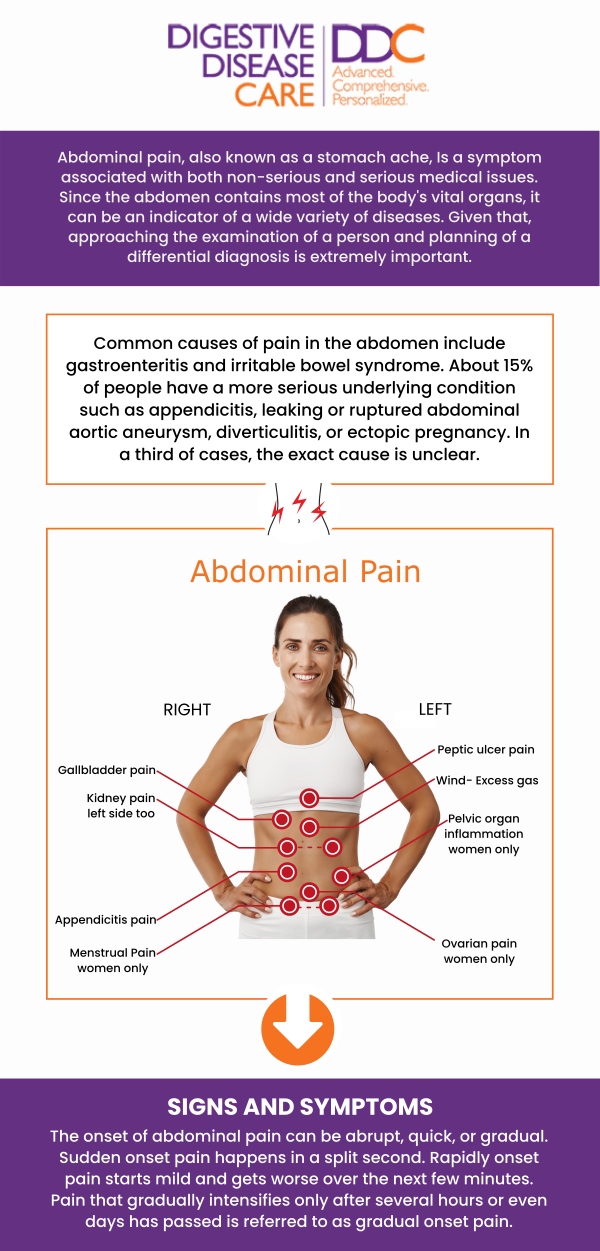
Table of Contents:
What are the most common causes of a stomach ache?
How long does a typical stomach ache last?
What symptoms can occur along with a stomach ache?
Can indigestion or gas cause a stomach ache?
When should you see a doctor for recurring stomach aches?
How Our Board-Certified Gastroenterologists At Digestive Disease Care Evaluate Stomach Ache in Massapequa, NY
At Digestive Disease Care, our board-certified gastroenterologists evaluate and treat a wide range of conditions that trigger a stomach ache. The most frequent causes include:
• Viral Gastroenteritis: Often called the “stomach flu,” this viral infection causes temporary inflammation in the stomach and intestines.
• Food Poisoning: Consuming contaminated food or water leads to rapid-onset abdominal cramping.
• Constipation: A buildup of hard stool in the colon creates pressure and a dull, aching stomach ache.
• Food Intolerances: Conditions like lactose intolerance or celiac disease cause cramping and bloating when you eat trigger foods.
• Irritable Bowel Syndrome (IBS): A chronic functional disorder that causes recurring stomach aches alongside changes in your bowel habits.
The duration of a stomach ache depends entirely on what triggered it. Our board-certified gastroenterologists at Digestive Disease Care typically observe the following timelines:
• Mild Indigestion: Resolves within a few hours as food moves through your digestive tract.
• Viral Infections or Food Poisoning: Usually peaks and resolves within 24 to 72 hours.
• Constipation-Related Pain: Persists until you have a successful bowel movement.
• Chronic Conditions: Pain that lasts for several days, weeks, or recurs frequently often points to underlying issues like IBS or inflammatory bowel disease.
A stomach ache rarely happens on its own. Accompanying symptoms give our board-certified gastroenterologists at Digestive Disease Care important clues about the root cause:
• Bowel Changes: Frequent diarrhea, severe constipation, or a sudden change in stool consistency.
• Physical Discomfort: Noticeable abdominal bloating, excessive gas, or uncomfortable fullness after eating a small amount.
• Upper GI Symptoms: Persistent nausea, vomiting, or a burning sensation in the upper chest and throat.
• Systemic Signs: Fever, chills, or body aches, which often point to an infection.
Yes, trapped gas and indigestion (dyspepsia) are two of the most common reasons for a sudden stomach ache. At Digestive Disease Care, our board-certified gastroenterologists frequently see patients whose pain is driven by:
• Trapped Gas: Stretches the intestinal walls, causing sharp, stabbing pains that may move around the abdomen.
• Indigestion: Creates a burning sensation or heavy fullness in the upper abdomen, usually right after eating.
• Eating Habits: Eating too quickly, talking while eating, or swallowing air can trigger painful gas buildup.
• Dietary Triggers: High-fat, spicy, or heavily processed foods take longer to digest and frequently lead to severe indigestion.
While mild, infrequent pain is normal, a stomach ache that disrupts your daily routine requires professional care. Our board-certified gastroenterologists at Digestive Disease Care recommend seeking medical evaluation if you experience:
• Persistent Pain: A stomach ache that progressively worsens or lasts for more than a few days.
• Sleep Disruption: Pain severe enough to wake you up in the middle of the night.
• Warning Signs: Unexplained weight loss, persistent vomiting, or difficulty swallowing.
• Bleeding: Seeing blood in your stool, vomit, or having dark, tarry stools.
• Jaundice: A noticeable yellowing of your skin or eyes.
At Digestive Disease Care in Massapequa, NY, our board-certified gastroenterologists take a comprehensive approach to diagnosing the exact cause of your stomach ache. To pinpoint the root cause, we recommend the following evaluation steps:
• In-Depth Consultation: A thorough review of your symptom timeline, dietary habits, and complete medical history.
• Targeted Lab Testing: We recommend specific blood and stool tests to check for underlying infections, anemia, or markers of inflammation.
• Breath Testing: Recommended to identify small intestinal bacterial overgrowth (SIBO) or specific food intolerances.
• Diagnostic Imaging: We may recommend an abdominal ultrasound or CT scan to rule out gallbladder issues or structural blockages.
• Endoscopic Procedures: For chronic or complex cases, we recommend an upper endoscopy or colonoscopy to directly visualize your digestive tract and take tissue biopsies.
For more information, contact us today or schedule an appointment online. We are conveniently located at 1061 N Broadway, Massapequa, NY 11758. We serve patients from Massapequa NY, Lindenhurst NY, Bethpage NY, Hempstead NY, Freeport NY, Farmingdale NY, Babylon NY and surrounding area.

Check Out Our 5 Star Reviews


Additional Services You May Like

Additional Services You May Like
- Abdominal Pain
- Acid Reflux
- Barretts Esophagus
- Bloating
- Capsule Endoscopy
- Celiac Disease
- Colon Cancer Screening
- Colonoscopy
- Constipation
- Crohns Disease
- Diarrhea
- Diverticulitis
- Esophageal PH Monitoring
- Fatty Liver
- Fibroscan
- Gallstones
- Gastroenterologist
- Gastric Chest Pain
- Gluten Intolerance
- Hemorrhoid
- Hemorrhoid Banding
- Hepatitis
- Irritable Bowel Syndrome
- Lactose Intolerance
- Pancreatitis
- Polyps
- Rectal Bleeding
- Stomach
- Ulcerative Colitis
- GI Urgent Care


 Send Text
 How May I Help You?