

Bloated Stomach Treatment in Melville, NY
Bloated stomach symptoms can cause abdominal fullness, tightness, gas, pressure, cramping, or digestive discomfort. At Digestive Disease Care, board-certified gastroenterologists evaluate possible causes such as constipation, food sensitivities, acid reflux, IBS, or digestive imbalance. Personalized care may include diagnostic testing, diet guidance, lifestyle changes, and treatment recommendations based on each patient’s symptoms. Patients can schedule a visit for a trusted bloated stomach evaluation and digestive health support. For more information, contact us today or schedule an appointment online. We are conveniently located at 150 Broadhollow Rd Suite 120-B, Melville, NY 11747.
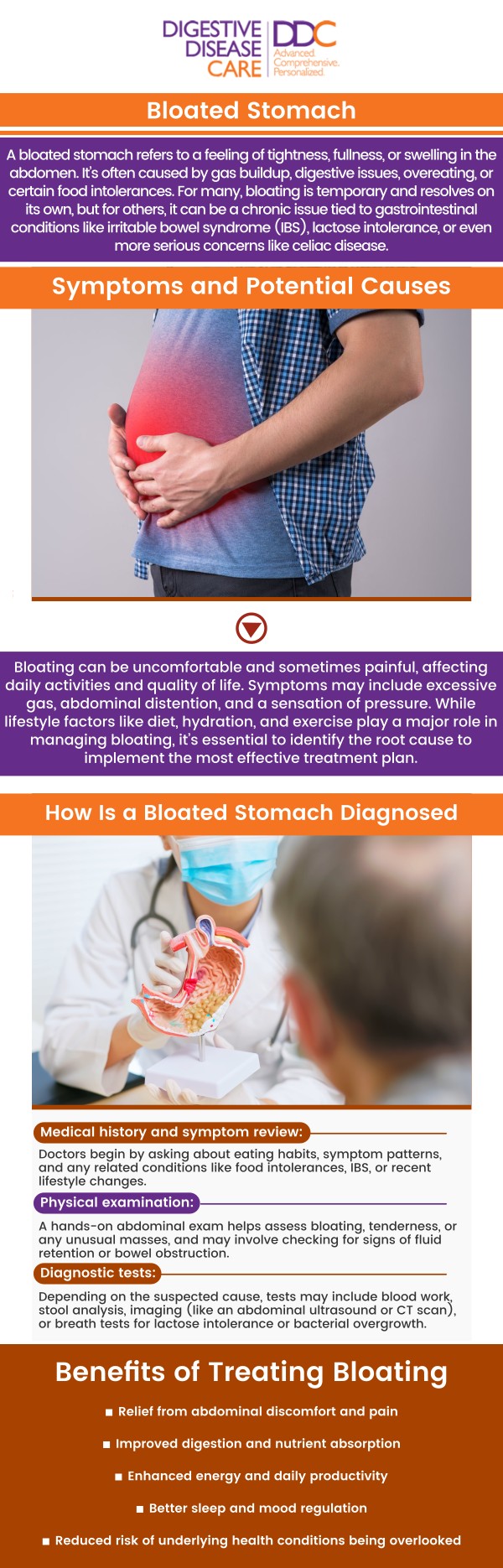
Table of Contents:
What causes a bloated stomach, and when should I seek treatment?
How can a doctor diagnose the reason for my bloated stomach?
What treatment options are available for bloating and digestive discomfort?
Can diet or lifestyle changes help prevent a bloated stomach from coming back?
Bloated Stomach Evaluation and Treatment by Board-Certified Gastroenterologists at Digestive Disease Care in Melville, NY
A bloated stomach can make the abdomen feel full, tight, swollen, or uncomfortable. Some patients may notice gas, pressure, cramping, nausea, burping, or changes in bowel habits along with bloating. At Digestive Disease Care in Melville, NY, board-certified gastroenterologists provide personalized evaluation and treatment to help identify the cause of bloating and guide patients toward lasting digestive relief.
• A bloated stomach may happen when gas builds up in the digestive tract or when food moves more slowly than usual. It can be related to eating habits, constipation, food sensitivities, swallowing air, or digestive imbalance. Occasional bloating is common, but frequent or painful bloating should be evaluated.
• Common causes of bloating include constipation, indigestion, acid reflux, overeating, eating too quickly, or drinking carbonated beverages. Some patients may also feel bloated after consuming dairy, gluten-containing foods, high-fiber foods, or certain gas-producing foods. Tracking symptoms can help identify possible triggers.
• Bloating may also be linked to digestive conditions such as irritable bowel syndrome, inflammatory bowel disease, small intestinal bacterial overgrowth, celiac disease, gallbladder problems, or delayed stomach emptying. A gastroenterologist can help determine whether bloating is simple, diet-related, or connected to an underlying GI condition.
• You should seek treatment in Melville, NY if bloating is persistent, painful, worsening, or affecting your daily comfort. Medical care is also important if bloating happens with unexplained weight loss, vomiting, blood in the stool, fever, severe abdominal pain, trouble swallowing, or major changes in bowel habits.
• A doctor begins by reviewing your symptoms, medical history, diet, bowel habits, medications, and lifestyle patterns. You may be asked when bloating occurs, what foods trigger it, how long it lasts, and whether it is linked to constipation, diarrhea, reflux, or abdominal pain. This helps narrow down possible causes.
• A physical examination may be performed to check for abdominal tenderness, swelling, pressure, or signs of digestive distress. Your provider may also ask about recent travel, infections, food intolerances, stress, prior surgeries, and family history of digestive conditions. These details help build a clearer picture of your GI health.
• Depending on your symptoms, diagnostic testing may be recommended. Testing may include blood work, stool testing, breath testing, imaging, endoscopy, colonoscopy, or other GI evaluations when clinically appropriate. The goal is to identify whether bloating is caused by inflammation, intolerance, infection, constipation, or another digestive issue.
• At Digestive Disease Care in Melville, NY, board-certified gastroenterologists use a personalized approach instead of assuming every patient has the same cause of bloating. Accurate diagnosis helps avoid unnecessary guessing and supports a more effective treatment plan based on the patient’s specific condition.
• Treatment for bloating depends on the underlying cause. If constipation is contributing to bloating, care may focus on improving bowel regularity, hydration, fiber intake, and bathroom habits. Relieving constipation can often reduce pressure, gas buildup, and abdominal fullness.
• If bloating is related to food intolerance or sensitivity, your doctor may recommend dietary adjustments or guided elimination strategies. This may involve identifying foods that commonly trigger gas, discomfort, or abdominal swelling. Patients should avoid making major diet changes without proper guidance, especially if symptoms are ongoing.
• When bloating is connected to acid reflux, indigestion, IBS, bacterial imbalance, or another GI condition, treatment may include a broader digestive care plan. This may involve lifestyle guidance, symptom management, testing when needed, and follow-up care to monitor improvement. The plan should be based on symptoms and diagnosis.
• Treatment may also include education on eating habits, portion control, meal timing, stress management, and physical activity. Many patients improve when they eat more slowly, avoid overeating, reduce carbonated drinks, stay active, and follow a consistent bowel routine. Small daily changes can make a meaningful difference.
• Diet and lifestyle changes can help prevent bloating from returning, especially when symptoms are linked to eating habits, constipation, or food triggers. Patients may benefit from eating smaller meals, chewing food well, drinking enough water, and avoiding foods that repeatedly cause discomfort.
• Keeping a food and symptom journal can help identify patterns. For example, some patients notice bloating after dairy, fried foods, artificial sweeteners, carbonated drinks, beans, onions, wheat, or large meals. A gastroenterologist can help determine whether these triggers suggest intolerance, IBS, or another digestive concern.
• Regular physical activity can support digestion and help reduce gas and constipation-related bloating. Even light walking after meals may help some patients feel less full or uncomfortable. Staying active also supports bowel movement regularity and overall digestive function.
• Stress can also affect digestion and may worsen bloating in some patients. Relaxation techniques, better sleep, regular meals, and consistent routines may help support the gut-brain connection. For patients with recurring symptoms, digestive care can help create a long-term prevention plan.
Digestive Disease Care in Melville, NY provides bloated stomach evaluation and treatment for patients experiencing gas, abdominal pressure, fullness, cramping, constipation, diarrhea, or digestive discomfort. The care team focuses on understanding the cause rather than only treating the symptom.
Board-certified gastroenterologists can evaluate whether bloating is related to diet, bowel habits, reflux, IBS, food intolerance, bacterial imbalance, or another GI condition. This helps patients receive care that is specific to their symptoms, health history, and lifestyle needs.
Patients should not ignore bloating that is severe, frequent, painful, or associated with warning signs. Early evaluation can help identify digestive concerns sooner and guide the right treatment approach. Digestive Disease Care offers compassionate support for patients seeking answers and relief.
If bloating keeps coming back, a personalized digestive health plan can help reduce discomfort and improve daily quality of life. Patients in Melville, NY can schedule a visit with Digestive Disease Care for trusted care from board-certified gastroenterologists. For more information, contact us today or schedule an appointment online. We are conveniently located at 150 Broadhollow Rd Suite 120-B, Melville, NY 11747. We have convenient locations to serve you in Melville NY, New Hyde Park NY, Forest Hills NY, Jericho NY, Mineola NY, Lake Success NY, Babylon NY, East Setauket NY, Massapequa NY, Riverhead NY and BEYOND.

Check Out Our 5 Star Reviews


Additional Services You May Like

Additional Services You May Like
- Abdominal Pain
- Acid Reflux
- Barretts Esophagus
- Bloating
- Capsule Endoscopy
- Celiac Disease
- Colon Cancer Screening
- Colonoscopy
- Constipation
- Crohns Disease
- Diarrhea
- Diverticulitis
- Esophageal PH Monitoring
- Fatty Liver
- Fibroscan
- Gallstones
- Gastroenterologist
- Gastric Chest Pain
- Gluten Intolerance
- Hemorrhoid
- Hemorrhoid Banding
- Hepatitis
- Irritable Bowel Syndrome
- Lactose Intolerance
- Pancreatitis
- Polyps
- Rectal Bleeding
- Stomach
- Ulcerative Colitis
- GI Urgent Care


 Send Text
 How May I Help You?