

Living With Celiac Disease: Gluten-Free Management and Digestive Care
Living with celiac disease requires strict dietary adjustments and specialized medical support to properly heal your digestive tract. At Digestive Disease Care (DDC) in Forest Hills, NY, our board-certified gastroenterologists provide guidance for successfully managing a safe, gluten-free lifestyle. We offer comprehensive diagnostic testing and personalized care plans designed to alleviate your symptoms and restore optimal nutrient absorption. Schedule a consultation with our Forest Hills team today to take control of your digestive health and thrive with celiac disease. For more information, contact us or book an appointment online. We are conveniently located at 70-10 Austin St #101, Forest Hills, NY 11375.
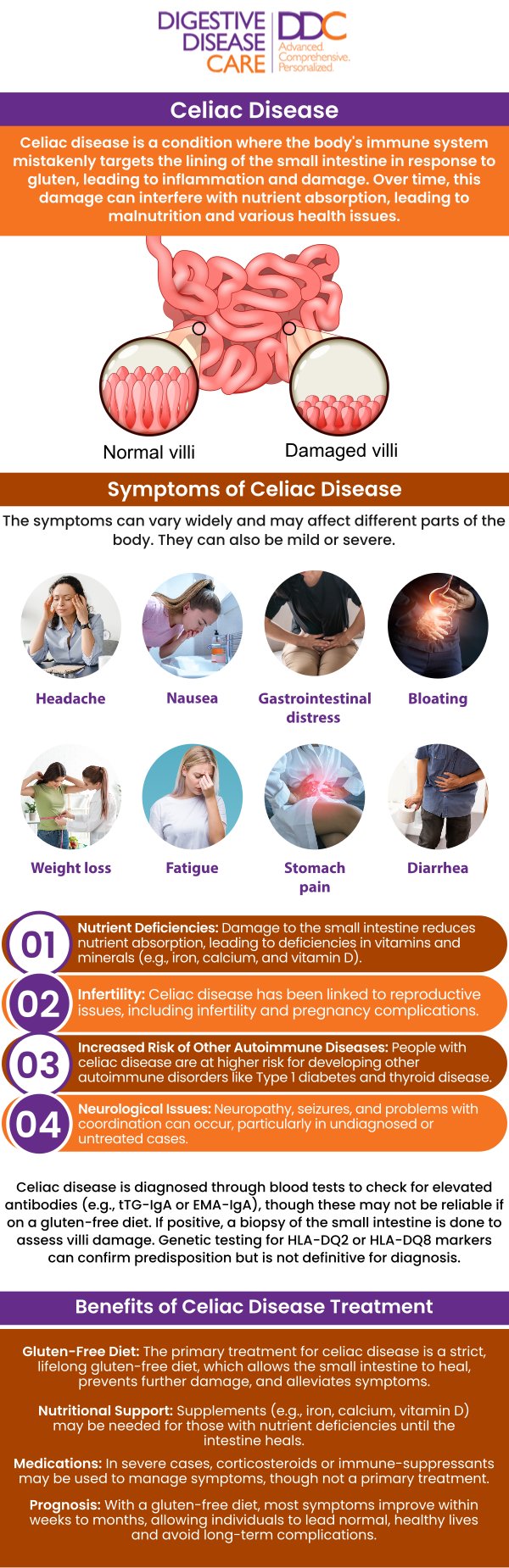
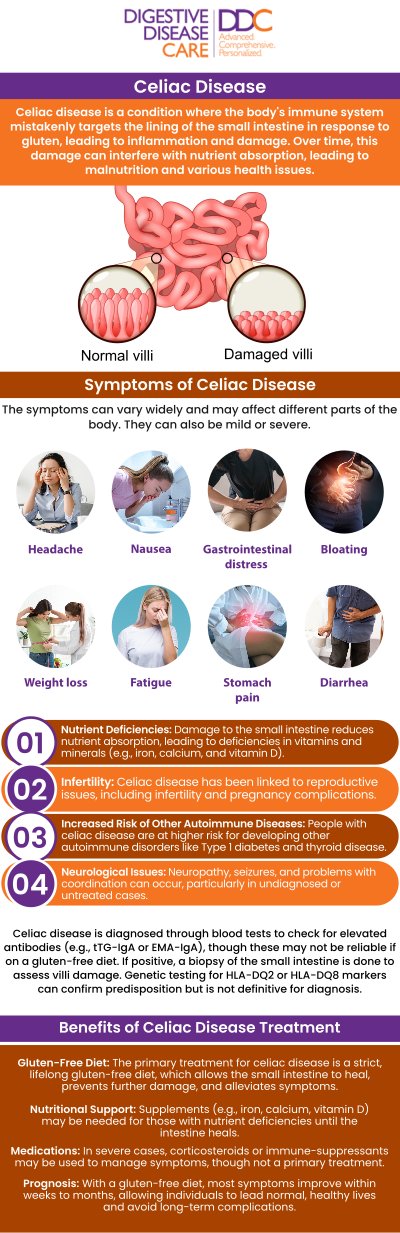
Table of Contents:
How does a gluten-free lifestyle help manage celiac disease?
What challenges do people face when managing celiac disease?
How can ongoing medical care support people living with celiac disease?
What steps can help prevent symptoms after a celiac disease diagnosis?
Supporting Life With Celiac Disease Through Digestive Care From Board-certified Gastroenterologists at Digestive Disease Care (DDC) in Forest Hills, NY (Austin Street)
Living with celiac disease involves understanding how gluten affects the body and making long-term changes to support digestive health. Celiac disease is an immune-related digestive condition where gluten exposure can trigger inflammation and damage the lining of the small intestine. Since symptoms and challenges can vary between individuals, ongoing awareness and proper management are important for maintaining overall wellness.
A gluten-free lifestyle, regular monitoring, and personalized digestive care can help individuals better manage celiac disease. At Digestive Disease Care (DDC) in Forest Hills, NY (Austin Street), our team of board-certified gastroenterologists provides personalized evaluations and ongoing digestive health support for patients living with celiac disease. Our team focuses on understanding each patient’s symptoms, health needs, and lifestyle factors to help create an individualized care approach.
For individuals with celiac disease, avoiding gluten is an important part of managing the condition. Gluten exposure can trigger an immune response that affects the small intestine and may interfere with the body’s ability to absorb nutrients properly.
A gluten-free lifestyle may help support digestive health by:
• Reducing intestinal irritation: Avoiding gluten can help reduce the immune response that contributes to intestinal inflammation.
• Supporting nutrient absorption: A healthy small intestine can better absorb important nutrients from food.
• Improving digestive symptoms: Many individuals notice improvement in symptoms such as bloating, abdominal discomfort, and bowel changes after following a gluten-free approach.
• Supporting overall wellness: Proper management may help improve energy levels and reduce concerns related to nutritional deficiencies.
Maintaining a gluten-free lifestyle requires careful attention to food choices, ingredients, and preparation methods. Gluten can be found in many common foods and may also appear in unexpected products, making awareness an important part of daily management.
Reading food labels, asking questions when dining outside the home, and understanding gluten-containing ingredients can help reduce accidental exposure. Nutrition choices should be personalized based on individual health needs and guidance from healthcare professionals.
At Digestive Disease Care (DDC), our team of board-certified gastroenterologists helps patients understand how celiac disease affects their digestive health and provides guidance for ongoing monitoring and management.
Managing celiac disease requires long-term attention to dietary choices and symptom awareness. While a gluten-free lifestyle can support digestive health, many individuals face challenges when adjusting to new routines.
Common challenges may include:
• Avoiding accidental gluten exposure: Gluten may be present in foods, supplements, or products that are not immediately obvious.
• Adjusting eating habits: Changing familiar meal choices and learning new food options can take time.
• Dining outside the home: Restaurants and social events may require additional planning to identify safe food choices.
• Maintaining balanced nutrition: Removing gluten-containing foods may require careful planning to ensure adequate nutrient intake.
• Understanding symptom changes: Some individuals may continue experiencing symptoms even after dietary adjustments.
Managing these challenges often involves education, planning, and ongoing awareness. Keeping track of symptoms and discussing concerns with a healthcare professional can help identify whether symptoms are related to gluten exposure or another digestive issue.
Regular communication with a gastroenterology team can also help address concerns related to nutritional health, symptom changes, and long-term digestive wellness.
At Digestive Disease Care (DDC) in Forest Hills, NY (Austin Street), our team of board-certified gastroenterologists provides personalized support to help patients navigate the challenges of living with celiac disease.
Ongoing medical care plays an important role in monitoring digestive health after a celiac disease diagnosis. Regular evaluations can help assess symptom changes, nutritional concerns, and overall wellness.
Our team may support celiac disease management through:
• Monitoring Digestive Health: Regular appointments allow our team to review symptoms, discuss lifestyle changes, and monitor how the digestive system is responding over time.
• Evaluating Nutritional Health: Celiac disease may affect nutrient absorption, making it important to monitor nutritional factors and address possible deficiencies when needed.
• Reviewing Symptoms: Persistent bloating, abdominal discomfort, fatigue, or bowel changes may require further evaluation to determine whether additional concerns are present.
• Providing Personalized Guidance: Every individual experiences celiac disease differently. Personalized care helps ensure recommendations are based on symptoms, health history, and individual needs.
Ongoing care is important even when symptoms improve. Continued monitoring can help support digestive wellness and provide guidance as lifestyle needs change.
At Digestive Disease Care (DDC), our team of board-certified gastroenterologists works with patients to monitor their digestive health and provide personalized recommendations for long-term celiac disease management.
After a celiac disease diagnosis, consistent management habits can help reduce the risk of symptoms and support digestive health. Since gluten exposure can occur accidentally, awareness and preparation are important parts of daily care.
Helpful steps may include:
• Following a gluten-free eating plan: Avoiding gluten-containing foods is an important part of managing celiac disease.
• Checking food labels carefully: Reviewing ingredients can help identify potential sources of gluten.
• Preventing cross-contact: Using separate preparation methods and avoiding shared surfaces may help reduce accidental exposure.
• Maintaining balanced nutrition: Choosing nutrient-rich foods can support overall wellness.
• Tracking symptoms: Recording digestive changes can help identify patterns and concerns.
• Keeping regular appointments: Follow-up care allows our team to monitor digestive health over time.
Living with celiac disease requires ongoing attention, but proper management can help individuals maintain digestive wellness and make informed decisions about their health.
At Digestive Disease Care (DDC) in Forest Hills, NY (Austin Street), our team of board-certified gastroenterologists provides continued digestive care and personalized guidance for individuals managing celiac disease.
Living with celiac disease involves more than avoiding gluten; it requires understanding symptoms, maintaining digestive health, and receiving appropriate medical support. A personalized approach can help individuals manage challenges, monitor their condition, and make informed choices for long-term wellness.
At Digestive Disease Care (DDC) in Forest Hills, NY (Austin Street), our team of board-certified gastroenterologists provides comprehensive celiac disease care through personalized evaluations, digestive health monitoring, and ongoing support. Our team focuses on helping patients understand their condition and develop strategies designed to support a healthier lifestyle while living with celiac disease. For more information, contact us or book an appointment online. We are conveniently located at 70-10 Austin St #101, Forest Hills, NY 11375. We serve patients from Forest Hills NY, Queens NY, Brooklyn NY, Elmont NY, Floral Park NY, New Hyde NY, and surrounding areas.

Check Out Our 5 Star Reviews


Additional Services You May Like

Additional Services You May Like
- Abdominal Pain
- Acid Reflux
- Barretts Esophagus
- Bloating
- Capsule Endoscopy
- Celiac Disease
- Colon Cancer Screening
- Colonoscopy
- Constipation
- Crohns Disease
- Diarrhea
- Diverticulitis
- Esophageal PH Monitoring
- Fatty Liver
- Fibroscan
- Gallstones
- Gastroenterologist
- Gastric Chest Pain
- Gluten Intolerance
- Hemorrhoid
- Hemorrhoid Banding
- Hepatitis
- Irritable Bowel Syndrome
- Lactose Intolerance
- Pancreatitis
- Polyps
- Rectal Bleeding
- Stomach
- Ulcerative Colitis
- GI Urgent Care


 Send Text
 How May I Help You?