

What Is a Stomach Ulcer?
A stomach ulcer, also known as a gastric ulcer, is a sore that develops on the lining of the stomach due to the erosion caused by stomach acids. Common causes include an infection from Helicobacter pylori (H. pylori) bacteria or the long-term use of nonsteroidal anti-inflammatory drugs (NSAIDs). Symptoms can include upper abdominal pain, nausea, and indigestion. If left untreated, stomach ulcers can lead to serious complications, such as bleeding or perforation, making it important to seek medical care from our board-certified gastroenterologists at Digestive Disease Care for proper diagnosis and treatment. For more information, contact us today or schedule an appointment online. We are conveniently located at 1575 Hillside Ave, New Hyde Park, NY 11040.
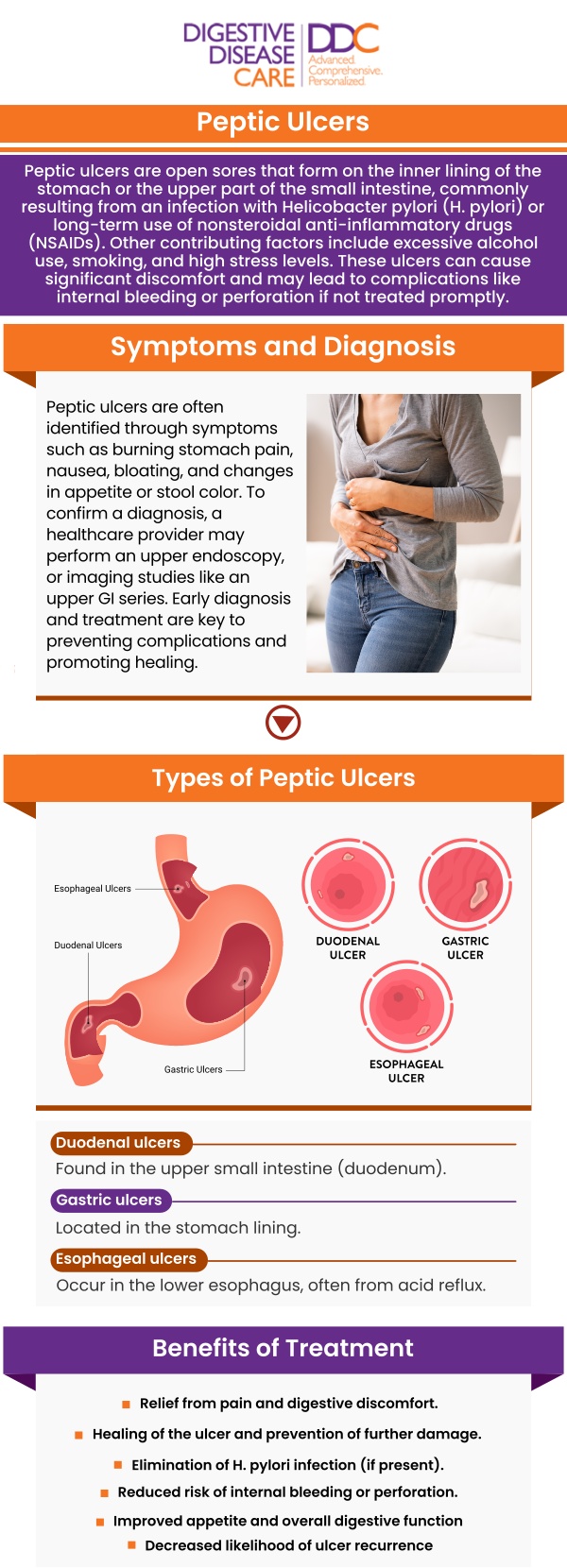
Table of Contents:
What is a stomach ulcer, and what causes it?
What are the common symptoms of a stomach ulcer?
How long does it take for a stomach ulcer to heal?
Can a stomach ulcer cause other digestive problems?
Effective Care for Stomach Ulcer Symptoms with Board-Certified Gastroenterologists at Digestive Disease Care (DDC) in New Hyde Park, NY
A stomach ulcer, also known as a gastric ulcer, is a painful lesion or sore that forms on the inner lining of the stomach. It occurs when the stomach’s protective mucus layer is weakened, allowing digestive acids to damage the underlying tissue. Ulcers can vary in size and severity, with some being small and others quite large. When left untreated, stomach ulcers can lead to serious complications, such as bleeding or perforation.
Common Causes of Stomach Ulcers:
• Helicobacter pylori (H. pylori) Infection: One of the most common causes of stomach ulcers, this bacterial infection damages the stomach’s protective lining, making it more susceptible to acid damage.
Nonsteroidal Anti-inflammatory Drugs (NSAIDs): Long-term use of NSAIDs can irritate the stomach lining and increase the risk of ulcer formation.
• Excessive Alcohol Consumption: Alcohol can irritate and erode the stomach lining, promoting the development of ulcers.
• Smoking: Smoking reduces the stomach’s ability to protect itself from acid, increasing the likelihood of ulcer formation.
• Stress: While stress itself may not directly cause ulcers, it can exacerbate existing conditions and increase acid production, worsening ulcer symptoms.
• Zollinger-Ellison Syndrome: A rare condition in which tumors cause excessive acid production, leading to the development of ulcers.
Other Contributing Factors:
• Dietary Factors: Eating spicy foods, citrus, or foods that irritate the stomach may trigger symptoms, though they don’t directly cause ulcers.
• Genetic Predisposition: Family history can increase the risk of developing ulcers due to genetic factors.
Understanding the underlying causes of stomach ulcers is essential for effective treatment and prevention. If you suspect you have a stomach ulcer, seeking care from a board-certified gastroenterologist can help identify the cause and recommend the best treatment plan.
Stomach ulcers can cause a range of symptoms, some of which are mild and others quite severe. Recognizing the symptoms early can help prevent complications and guide treatment.
Common Symptoms of a Stomach Ulcer:
• Abdominal Pain: The most common symptom, ulcer pain is typically felt in the upper abdomen, often described as a dull, burning sensation. The pain may come and go and can worsen on an empty stomach or after eating.
• Bloating and Fullness: A feeling of fullness or bloating after eating even small amounts of food.
• Nausea and Vomiting: Nausea can occur, especially if the ulcer leads to a blockage in the stomach. In severe cases, vomiting blood (which may look like coffee grounds) can happen, indicating bleeding.
• Heartburn: A burning sensation in the chest, which is similar to acid reflux, can occur due to the irritation of the stomach lining.
• Indigestion: Difficulty digesting food or discomfort after eating can be signs of an ulcer.
• Loss of Appetite: Many individuals with stomach ulcers lose their appetite due to pain and discomfort when eating.
Serious Symptoms to Watch For:
• Vomiting Blood: If the ulcer is bleeding, you may vomit blood or notice blood in your stool (dark, tarry stools).
• Severe Abdominal Pain: Sharp or sudden pain that worsens over time or doesn’t subside.
• Unexplained Weight Loss: If you are losing weight without trying, it could be due to the lack of appetite or complications from the ulcer.
If you experience any of these symptoms, especially persistent or severe abdominal pain, it is important to consult a gastroenterologist for evaluation and treatment.
The healing time for a stomach ulcer depends on the severity of the ulcer, the cause, and the type of treatment provided. Most stomach ulcers heal within a few weeks to a couple of months with the right treatment. However, it’s crucial to follow the prescribed treatment plan to ensure full recovery and reduce the risk of complications.
Factors That Affect Healing Time:
Treatment Method:
• Medications: Proton pump inhibitors (PPIs), H2 blockers, and antibiotics for H. pylori infection can help heal ulcers quickly. If treated properly, ulcers may begin to heal in a few weeks.
• Diet and Lifestyle Changes: Avoiding irritants like alcohol, spicy foods, and NSAIDs, and managing stress can help speed up the healing process.
• Follow-Up Care: Regular follow-up with a gastroenterologist ensures the ulcer is healing properly and provides an opportunity to adjust the treatment if needed.
Type of Ulcer:
• Mild Ulcers: These may heal within 4 to 6 weeks with proper treatment.
• Severe Ulcers: Larger or deeper ulcers, or those complicated by bleeding or perforation, may take longer to heal, potentially requiring additional treatments or surgical intervention.
Factors That Can Delay Healing:
• Noncompliance with Medication: Not taking prescribed medications as directed can delay healing.
• Ongoing Use of Irritating Substances: Continued alcohol consumption, smoking, or NSAID use can hinder the healing process.
• Chronic Conditions: Underlying conditions, such as diabetes, can slow healing and make treatment more challenging.
It’s important to consult a gastroenterologist for proper diagnosis and treatment, as untreated ulcers can lead to more serious complications, such as bleeding or perforation.
Yes, a stomach ulcer can lead to other digestive problems, particularly if left untreated or if complications arise. While the ulcer itself causes localized pain and discomfort, it can also affect the digestive system as a whole.
Potential Digestive Problems Caused by Stomach Ulcers:
• Gastrointestinal Bleeding: One of the most serious complications, gastrointestinal bleeding can occur when the ulcer erodes into blood vessels in the stomach lining. This can lead to vomiting blood, passing black or tarry stools, or experiencing weakness and dizziness.
• Perforation: In severe cases, an untreated ulcer can cause a hole (perforation) in the stomach or intestinal wall. This leads to peritonitis, a life-threatening infection in the abdominal cavity.
• Blockage of the Stomach: A stomach ulcer can cause swelling or scarring that blocks the passage of food from the stomach to the small intestine, leading to nausea, vomiting, and a feeling of fullness.
• Indigestion or Dyspepsia: Ulcers can irritate the stomach lining and lead to chronic indigestion, which can be uncomfortable and affect eating habits.
How These Complications Affect Digestion:
• Impaired Digestion: Ulcers can slow down the stomach’s ability to process food properly, leading to discomfort, nausea, and bloating.
• Nutrient Deficiency: Prolonged ulcer symptoms can cause decreased appetite and poor nutrient absorption, leading to deficiencies in vitamins and minerals.
If you have a stomach ulcer, it is important to follow your treatment plan to prevent complications. Consult with a gastroenterologist for a comprehensive evaluation and management plan.
If you’re experiencing stomach ulcer symptoms such as persistent abdominal pain, nausea, or indigestion, it’s essential to seek expert care. At Digestive Disease Care (DDC) in New Hyde Park, NY, our board-certified gastroenterologists specialize in diagnosing and treating stomach ulcers. We offer comprehensive evaluations, including tests for H. pylori infection and other underlying causes, and provide effective treatment plans tailored to your needs. Our goal is to relieve your symptoms and help promote healing, so you can get back to feeling your best.
At DDC, we understand the impact that stomach ulcers can have on your daily life. Our experienced gastroenterologists work closely with each patient to develop a personalized treatment plan that may include medications, lifestyle changes, and ongoing monitoring. With the right care, most stomach ulcers heal within a few weeks, and our team is committed to guiding you through every step of the process. For more information, contact us today or schedule an appointment online. We are conveniently located at 1575 Hillside Ave, New Hyde Park, NY 11040. We have convenient locations to serve you in Melville NY, New Hyde Park NY, Forest Hills NY, Jericho NY, Mineola NY, Lake Success NY, Babylon NY, East Setauket NY, Massapequa NY, Riverhead NY and BEYOND.

Check Out Our 5 Star Reviews


Additional Services You May Like

Additional Services You May Like
- Abdominal Pain
- Acid Reflux
- Barretts Esophagus
- Bloating
- Capsule Endoscopy
- Celiac Disease
- Colon Cancer Screening
- Colonoscopy
- Constipation
- Crohns Disease
- Diarrhea
- Diverticulitis
- Esophageal PH Monitoring
- Fatty Liver
- Fibroscan
- Gallstones
- Gastroenterologist
- Gastric Chest Pain
- Gluten Intolerance
- Hemorrhoid
- Hemorrhoid Banding
- Hepatitis
- Irritable Bowel Syndrome
- Lactose Intolerance
- Pancreatitis
- Polyps
- Rectal Bleeding
- Stomach
- Ulcerative Colitis
- GI Urgent Care


 Send Text
 How May I Help You?