

Symptoms of Gallstones: When to Seek Help
If you experience sudden and intense abdominal pain, nausea, or jaundice, it may be a sign of gallstones blocking bile flow. These symptoms require prompt medical attention to prevent complications like infections or organ damage. Our team of board-certified gastroenterologists at Digestive Disease Care in New York is here to provide accurate diagnosis and effective treatment options. For more information, contact us today or schedule an appointment online. We have convenient locations to serve you in Babylon NY, East Setauket NY, Forest Hills NY, Jericho NY, Lake Success NY, Melville NY, Mineola NY, Massapequa NY, New Hyde Park NY and Riverhead NY.
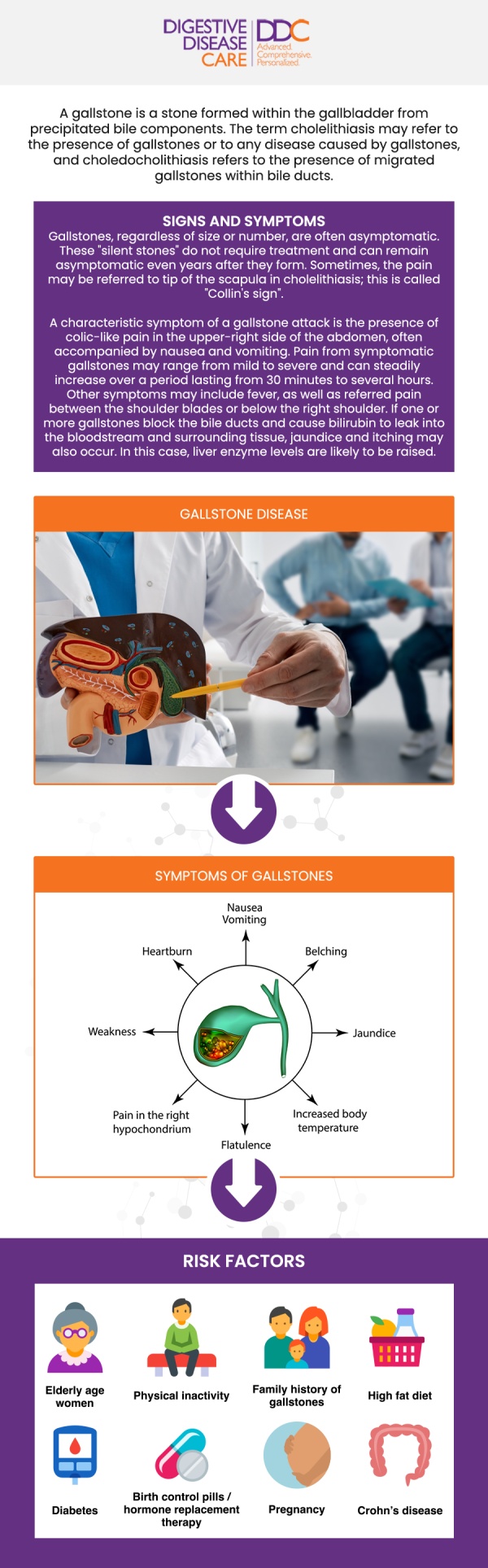

Table of Contents:
What are the symptoms of Gallstones?
What are the potential complications of untreated gallstones?
When should I seek medical help for gallstones?
Can gallstones go away by themselves?
From Abdominal Pain to Nausea: Gastroenterologists at Digestive Disease Care Discuss Gallstone Symptoms
Gallstones are hardened deposits that develop in the gallbladder, a small organ located below the liver responsible for storing bile. The symptoms of gallstones can differ based on their size and whether they block the flow of bile, causing pain and discomfort.
Common symptoms include:
• Abdominal pain: Typically in the upper right side of the abdomen, pain may be sudden and intense, often referred to as a “gallbladder attack.”
• Pain after eating: Gallstone pain often worsens after eating fatty meals, as the gallbladder contracts to release bile for digestion.
• Jaundice: Yellowing of the skin and eyes, which occurs when gallstones block the bile duct, causing bile to enter the bloodstream.
• Nausea and vomiting: These symptoms can accompany an attack of gallstones, especially if the stone causes bile flow obstruction.
• Indigestion or bloating: Some people with gallstones experience ongoing digestive discomfort, such as fullness, gas, and burping.
• Fever or chills: If the gallstones lead to an infection in the gallbladder, a person may develop fever and chills, which is a medical emergency.
Not all individuals with gallstones experience symptoms, a condition referred to as “silent” gallstones. In such cases, the gallstones may never cause any issues, and individuals may not require treatment. However, if symptoms such as intense pain or jaundice occur, seeking medical attention promptly is important.
If left untreated, gallstones can lead to several serious complications. The risk of these complications increases if the stones block bile flow or cause inflammation in the gallbladder.
Common complications include:
• Cholecystitis (Inflammation of the gallbladder): Gallstones can block the ducts of the gallbladder, leading to inflammation, pain, and infection.
• Bile duct obstruction: A large gallstone can obstruct the bile duct, which can cause jaundice and affect liver function.
• Pancreatitis: If a gallstone blocks the pancreatic duct, it can cause inflammation of the pancreas, a condition known as pancreatitis. This is a severe and painful condition that requires immediate medical attention.
• Gallbladder infection: Blockage caused by gallstones may lead to infection in the gallbladder, which can spread to other parts of the body and become life-threatening.
• Gallbladder cancer: Though rare, untreated long-term inflammation and irritation from gallstones may increase the risk of gallbladder cancer.
Timely treatment of gallstones is essential to prevent these complications, especially in individuals who experience severe pain, nausea, or fever.
Seeking medical help for gallstones is crucial when symptoms worsen or cause severe discomfort. You should consult a healthcare provider if you experience:
• Severe abdominal pain: Pain that comes on suddenly, especially in the upper right abdomen, and lasts for more than a few hours.
• Pain radiating to the back or shoulder: Gallstone-related pain can spread to the back or right shoulder blade, particularly after eating.
• Jaundice: Yellowing of the skin or eyes, which indicates a possible bile duct obstruction and requires immediate attention.
• Nausea and vomiting: Accompanied by intense abdominal pain, especially if you’re unable to keep food or fluids down.
• Fever and chills: These symptoms may indicate an infection in the gallbladder or bile ducts, which is a medical emergency.
• Changes in bowel movements: If you notice pale stools or dark urine, it may suggest a gallstone blockage affecting the liver or bile ducts.
If you notice any of these symptoms, especially if they come on suddenly and are intense, it’s important to seek medical attention right away. Delaying treatment could lead to serious complications, including infections or damage to vital organs. Your doctor may suggest diagnostic imaging, such as an ultrasound or CT scan, to confirm the presence of gallstones and help determine the most appropriate treatment plan.
In some cases, gallstones may not cause symptoms and can remain asymptomatic without requiring treatment. However, gallstones do not go away on their own. If gallstones are present but not causing any issues, your doctor may simply monitor the condition with periodic checkups.
• Silent gallstones: Some individuals may have gallstones that do not cause pain or other symptoms, and these may never lead to complications. In such cases, treatment may not be necessary.
• Symptomatic gallstones: If gallstones block bile flow or cause symptoms such as pain, nausea, or jaundice, medical intervention is necessary.
• Non-surgical treatments: While gallstones cannot go away on their own, certain non-surgical options may help dissolve some types of gallstones, although these treatments are not always effective and take a long time.
Ultimately, if you experience symptoms or complications from gallstones, it’s important to seek medical treatment.
At Digestive Disease Care in New York, our board-certified gastroenterologists specialize in diagnosing and managing gallstones, a common condition that can cause a range of symptoms, including sharp abdominal pain, nausea, and bloating. Gallstones form in the gallbladder and can block bile ducts, leading to inflammation and discomfort. Our team uses advanced diagnostic tools to accurately identify gallstones and recommend the most effective non-surgical treatments to manage symptoms and prevent complications like pancreatitis.
Located in New York, Digestive Disease Care provides personalized care for patients suffering from gallstones, focusing on medications, dietary modifications, and lifestyle adjustments to relieve symptoms and improve digestive health. If you experience upper right abdominal pain, nausea, or jaundice, our experts are here to help you find the best treatment plan tailored to your needs. Please contact us for more information or request an appointment online. We have convenient locations to serve you in Babylon NY, East Setauket NY, Forest Hills NY, Jericho NY, Lake Success NY, Melville NY, Mineola NY, Massapequa NY, New Hyde Park NY and Riverhead NY.

Check Out Our 5 Star Reviews


Additional Services You May Like

Additional Services You May Like
- Abdominal Pain
- Acid Reflux
- Barretts Esophagus
- Bloating
- Capsule Endoscopy
- Celiac Disease
- Colon Cancer Screening
- Colonoscopy
- Constipation
- Crohns Disease
- Diarrhea
- Diverticulitis
- Esophageal PH Monitoring
- Fatty Liver
- Fibroscan
- Gallstones
- Gastroenterologist
- Gastric Chest Pain
- Gluten Intolerance
- Hemorrhoid
- Hemorrhoid Banding
- Hepatitis
- Irritable Bowel Syndrome
- Lactose Intolerance
- Pancreatitis
- Polyps
- Rectal Bleeding
- Stomach
- Ulcerative Colitis
- GI Urgent Care


 Send Text
 How May I Help You?