

What Are the Stages of Fatty Liver Disease and How Does It Progress?
Fatty liver disease can progress through several stages, beginning with excess fat buildup in the liver and potentially advancing to inflammation, fibrosis, and cirrhosis. Many people remain in the early stages without significant liver damage, while others develop ongoing inflammation and scarring over time. Factors such as obesity, diabetes, high triglycerides, and metabolic syndrome may increase the risk of progression. At Digestive Disease Care, our board-certified gastroenterologists evaluate fatty liver disease and provide personalized care to help protect long-term liver health. For more information, contact us today or schedule an appointment online. We are conveniently located at 150 Broadhollow Rd Suite 120-B, Melville, NY 11747.
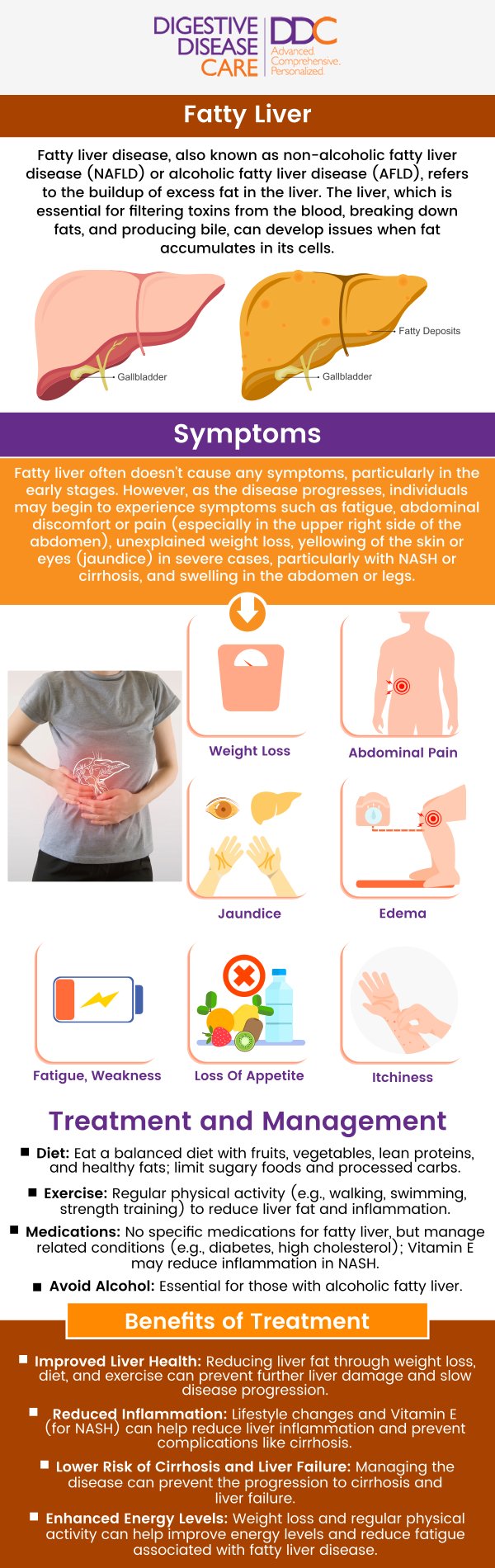
Table of Contents:
What are the main stages of fatty liver disease?
How does fatty liver disease progress from fat buildup to liver damage?
What factors can increase the risk of fatty liver disease progression?
Can the progression of fatty liver disease be slowed or reversed?
At Digestive Disease Care, Our Board-Certified Gastroenterologists Evaluate Fatty Liver Disease and Its Progression in Melville, NY
Fatty liver disease can range from simple fat accumulation to inflammation, fibrosis, and advanced liver scarring. The condition, now commonly called metabolic dysfunction-associated steatotic liver disease (MASLD), was previously known as nonalcoholic fatty liver disease. Not everyone with fatty liver disease progresses through every stage.
The main stages may include:
• Simple fatty liver: Excess fat accumulates in liver cells, but there may be little or no inflammation or liver-cell damage.
• Steatohepatitis: Fat buildup occurs along with inflammation and liver-cell injury. This stage is commonly called metabolic dysfunction-associated steatohepatitis, or MASH.
• Fibrosis: Continued inflammation can cause scar tissue to form within the liver. Fibrosis may range from mild to advanced.
• Cirrhosis: Extensive scarring changes the structure of the liver and can interfere with normal liver function.
• Advanced liver complications: Some people with cirrhosis may eventually develop serious problems involving liver function and overall health.
Fatty liver disease can develop quietly, and some patients may not notice symptoms as the condition progresses. Assessing whether fibrosis is present can be especially important because increasing scar tissue may raise the risk of cirrhosis and other liver-related complications.
Fatty liver disease generally begins when excess fat collects inside liver cells. In many people, this fat buildup may remain relatively stable without causing major liver damage. In others, metabolic stress and other health factors can contribute to inflammation and injury within the liver.
When inflammation persists, the liver repeatedly attempts to repair damaged tissue. Over time, this repair process can produce scar tissue known as fibrosis. If liver injury continues, fibrosis may become more extensive and eventually lead to cirrhosis.
A simplified progression may include:
• Excess fat accumulates inside liver cells.
• Metabolic stress begins affecting liver-cell health.
• Inflammation and liver-cell injury may develop.
• Repeated injury causes scar tissue to form.
• Fibrosis becomes more extensive over time.
• Advanced fibrosis may progress to cirrhosis.
• Severe cirrhosis can eventually interfere with normal liver function.
Progression does not happen at the same rate for everyone. Some individuals remain in the early stages for many years, while others may experience faster development of inflammation and fibrosis. Regular evaluation can help determine whether fatty liver disease is stable or becoming more advanced.
Several metabolic, lifestyle, and health-related factors may increase the likelihood that fatty liver disease will progress from simple fat accumulation to inflammation and fibrosis. Having multiple metabolic conditions at the same time may further increase the risk of more advanced liver disease.
Factors that may contribute to progression include:
• Excess body weight or obesity
• Type 2 diabetes
• Insulin resistance
• Metabolic syndrome
• High triglyceride levels
• Abnormal cholesterol levels
• High blood pressure
• Persistent liver inflammation
• Increasing levels of liver fibrosis
• Alcohol use
• Certain genetic factors
• Other chronic liver conditions
• Limited physical activity
• Poorly controlled metabolic health concerns
People with steatohepatitis and significant fibrosis may have a greater risk of developing cirrhosis than individuals who have liver fat without substantial inflammation or scarring.
Because fatty liver disease may cause few noticeable symptoms, people with metabolic risk factors may benefit from appropriate medical evaluation. Blood tests, imaging studies, fibrosis scoring tools, and liver stiffness testing may help determine whether more advanced disease is present.
In many patients, especially during earlier stages, fat accumulation and liver inflammation may improve when underlying metabolic risk factors are addressed. Some degree of fibrosis may also improve in certain people, although the possibility of reversal depends on the stage and severity of liver damage.
Strategies that may support liver health include:
• Achieving and maintaining a healthy body weight
• Following a balanced and nutrient-rich eating pattern
• Participating in regular physical activity
• Managing blood sugar levels
• Controlling high cholesterol and triglycerides
• Managing high blood pressure
• Discussing alcohol intake with a healthcare professional
• Avoiding unnecessary substances or supplements that may affect the liver
• Attending recommended medical follow-up appointments
• Monitoring liver function and fibrosis when appropriate
Gradual weight loss may help reduce liver fat and inflammation in people who are overweight or obese. Improvements in metabolic health can also reduce strain on the liver and may help prevent or slow further scarring.
Advanced cirrhosis is more difficult to reverse and generally requires ongoing medical monitoring. This is why identifying fatty liver disease before extensive scarring develops can be important. Regular follow-up allows changes in liver health to be recognized earlier and helps guide an individualized management plan.
At Digestive Disease Care, our board-certified gastroenterologists provide personalized evaluation and ongoing care for patients with fatty liver disease in Melville, NY. Our team considers liver test results, metabolic health, medical history, symptoms, previous imaging, medications, lifestyle factors, and other conditions that may affect liver health.
Our evaluation and management may include:
• Reviewing abnormal liver enzyme results
• Assessing risk factors for fatty liver disease
• Evaluating diabetes, obesity, cholesterol, and other metabolic concerns
• Determining whether liver imaging may be appropriate
• Assessing the likelihood and severity of fibrosis
• Monitoring changes in liver health over time
• Identifying signs that may suggest disease progression
• Helping patients understand liver fat, inflammation, fibrosis, and cirrhosis
• Providing individualized guidance for supporting liver health
• Recommending appropriate follow-up based on disease severity
Fatty liver disease does not progress to advanced liver damage in every patient, but identifying inflammation and fibrosis early can help determine who may need closer monitoring. At Digestive Disease Care, our board-certified gastroenterologists work with patients in Melville, NY, to evaluate the stage of fatty liver disease, monitor progression, address relevant risk factors, and support long-term liver health through individualized digestive care. For more information, contact us today or schedule an appointment online. We are conveniently located at 150 Broadhollow Rd Suite 120-B, Melville, NY 11747. We have convenient locations to serve you in Melville NY, New Hyde Park NY, Forest Hills NY, Jericho NY, Mineola NY, Lake Success NY, Babylon NY, East Setauket NY, Massapequa NY, Riverhead NY, and surrounding areas.

Check Out Our 5 Star Reviews


Additional Services You May Like

Additional Services You May Like
- Abdominal Pain
- Acid Reflux
- Barretts Esophagus
- Bloating
- Capsule Endoscopy
- Celiac Disease
- Colon Cancer Screening
- Colonoscopy
- Constipation
- Crohns Disease
- Diarrhea
- Diverticulitis
- Esophageal PH Monitoring
- Fatty Liver
- Fibroscan
- Gallstones
- Gastroenterologist
- Gastric Chest Pain
- Gluten Intolerance
- Hemorrhoid
- Hemorrhoid Banding
- Hepatitis
- Irritable Bowel Syndrome
- Lactose Intolerance
- Pancreatitis
- Polyps
- Rectal Bleeding
- Stomach
- Ulcerative Colitis
- GI Urgent Care


 Send Text
 How May I Help You?