

Acid Reflux and Chest Pain: Causes, Symptoms & When to See a GI Doctor
Chest pain from acid reflux occurs when stomach acid flows upward, irritating the esophagus and causing sharp, burning discomfort or esophageal spasms. At Digestive Disease Care in Riverhead, NY, our board-certified gastroenterologists specialize in diagnosing non-cardiac chest pain to rule out structural issues and determine the precise source of your symptoms. Through advanced diagnostic evaluations like upper endoscopy, we create targeted treatment plans to relieve discomfort and prevent future acid flare-ups. For more information, contact us today or schedule an appointment online. We are conveniently located at 750 Old Country Rd, Riverhead, NY 11901.
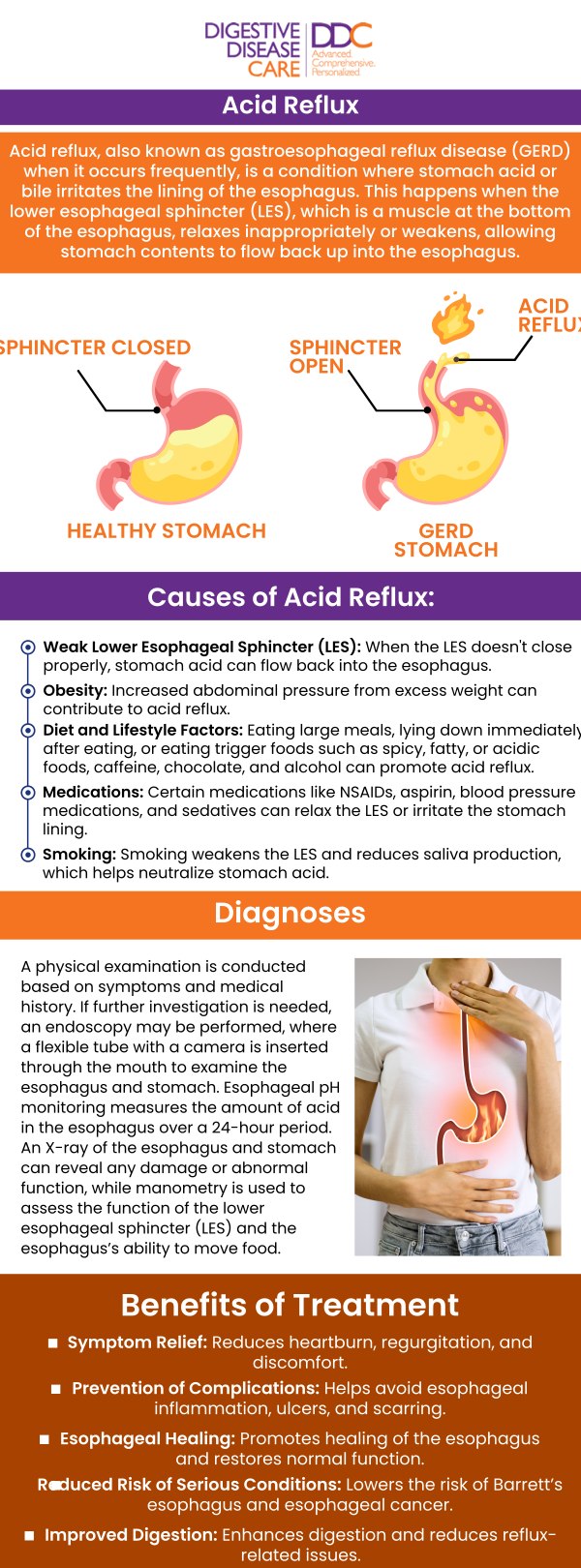
Table of Contents:
Can acid reflux cause chest pain?
Why does acid reflux chest pain get worse after eating or lying down?
When does recurring acid reflux chest pain require evaluation by a GI doctor?
How can you tell the difference between acid reflux chest pain and heart-related chest pain?
How long does acid reflux chest pain usually last?
Can gas or acid reflux pain radiate to the back or shoulder?
What immediate home remedies help calm GERD chest pain?
What should I bring to my GI consultation for non-cardiac chest pain?
How Our Board-Certified Gastroenterologists Evaluate Esophageal Chest Pain At Digestive Disease Care in Riverhead, NY
Experiencing chest pain can be alarming, but heart problems are not the only potential cause. Digestive issues—specifically severe gastroesophageal reflux—frequently trigger chest discomfort that mimics cardiac events. Understanding how stomach acid affects the esophagus can help you manage symptoms effectively and know when to seek medical evaluation.
Can acid reflux cause chest pain?
Yes, acid reflux is a common cause of non-cardiac chest pain. When stomach acid or digestive fluids flow backward into the esophagus, the acidic lining irritates the esophageal tissue. At Digestive Disease Care, our board-certified gastroenterologists evaluate patients experiencing acid reflux chest pain through the following mechanisms:
• Esophageal Tissue Inflammation: Stomach acid damages the mucosal lining, causing local pain and raw sensitivity behind the breastbone.
• Esophageal Spasms: Acid exposure can trigger sudden, painful involuntary muscle contractions in the esophageal wall.
• Nerve Sensitivity: Chronic exposure to gastric fluids heightens nerve sensitivity, making even mild acid movement feel intense.
• Esophageal Distension: Trapped air, gas, and refluxed fluid stretch the lower esophagus, creating a feeling of deep chest pressure.
Why does acid reflux chest pain get worse after eating or lying down?
Chest pain from acid reflux frequently intensifies after meals or when reclining due to distinct physiological factors. Consulting with board-certified gastroenterologists at Digestive Disease Care can help identify specific food and positional triggers affecting your digestion:
• Increased Stomach Volume: Large or high-fat meals expand the stomach, putting elevated physical pressure against the lower esophageal sphincter (LES).
• Loss of Gravitational Pull: Sitting or standing uses gravity to keep acid down; lying flat allows acid to flow freely along the horizontal esophagus.
• Sphincter Relaxation: Trigger foods—including caffeine, alcohol, citrus, tomatoes, and mint—chemically relax the LES muscle.
• Delayed Gastric Emptying: Heavy or rich meals slow down stomach emptying, prolonging the window of time during which reflux can occur.
• Increased Abdominal Pressure: Bending over or wearing tight waistbands after eating compresses the stomach and pushes contents upward.
When does recurring acid reflux chest pain require evaluation by a GI doctor?
While occasional heartburn is common, persistent chest pain warrants targeted medical attention. Our board-certified gastroenterologists at Digestive Disease Care recommend seeking a specialist evaluation under the following circumstances:
• Frequent Symptoms: Experiencing chest discomfort or heartburn more than twice a week.
• Failed Medication: Symptoms persisting or worsening despite taking over-the-counter antacids or acid reducers.
• Difficulty Swallowing (Dysphagia): Feeling like food gets stuck in your chest or throat during meals.
• Painful Swallowing (Odynophagia): Experiencing sharp pain whenever food or liquid passes down the esophagus.
• Unexplained Weight Loss: Unexpected weight loss paired with persistent digestive discomfort.
• Warning Signs: Experiencing persistent vomiting, dark or tarry stools, chronic coughing, or choking at night.
How can you tell the difference between acid reflux chest pain and heart-related chest pain?
Because cardiac pain and esophageal pain share similar nerve pathways, distinguishing between the two can be challenging. Our board-certified gastroenterologists at Digestive Disease Care emphasize checking these key differences:
| Symptom Feature | Acid Reflux Chest Pain | Heart-Related Chest Pain (Angina/Heart Attack) |
| Pain Quality | Sharp, burning, or tight sensation behind the breastbone | Heavy pressure, squeezing, crushing weight, or tightness |
| Primary Triggers | Triggered by eating, lying flat, or bending over | Triggered by physical exertion or stress |
| Relief Factors | Often improves with antacids or upright posture | Improves with rest or nitroglycerin; unchanged by antacids |
| Associated Symptoms | Sour taste in mouth, regurgitation, bloating, throat clearing | Shortness of breath, cold sweats, dizziness, nausea |
| Pain Radiation | May radiate toward the neck or upper back | Radiates to the left arm, shoulder, jaw, or back |
Emergency Note: Always seek immediate emergency medical care (call 911) if chest pain is sudden, severe, accompanied by shortness of breath, sweating, or radiation to your left arm or jaw. Cardiac causes must always be ruled out first.
How long does acid reflux chest pain usually last?
• Duration Range: Pain can last anywhere from a few minutes to several hours.
• Prolonged Spasms: Severe esophageal spasms or continuous acid exposure can prolong discomfort until stomach acid neutralizes.
• Position Factors: Lying down can prolong the pain, whereas sitting upright helps shorten the duration.
• Referred Pain Pathways: Shared nerve pathways can transmit esophageal pain signals to nearby body parts.
• Common Radiation Sites: Pain frequently travels to the mid-back, between the shoulder blades, upper chest, and neck.
• Upper GI Gas: Trapped gas in the upper stomach can intensify pain felt in the upper back and shoulders.
• Stand Upright: Use gravity immediately to draw stomach acid back down.
• Drink Water: Sip a glass of water to wash residual acid out of the esophagus.
• Take Antacids: Use an over-the-counter antacid or H2 blocker to neutralize acid.
• Loosen Clothing: Unbutton tight belts or waistbands to relieve pressure on your stomach.
• Medication List: A full list of current prescriptions, supplements, and over-the-counter drugs.
• Symptom Log: Notes detailing when pain happens relative to eating, sleeping, or specific foods.
• Cardiac Clearance: Copies of recent cardiac evaluations (ECGs, stress tests, or cardiology notes) confirming your heart has been cleared.
At Digestive Disease Care in Riverhead, NY, our board-certified gastroenterologists provide thorough diagnostic evaluations to identify the exact source of non-cardiac chest pain and implement effective treatment plans:
Advanced Diagnostics
• Upper Endoscopy (EGD): Direct inspection of the esophageal lining to check for inflammation, ulcers, strictures, or Barrett’s esophagus.
• Esophageal Manometry: Evaluation of muscle strength, coordination, and spasm patterns within the esophagus.
Personalized Treatment Plans
• Targeted Acid Suppression: Prescription medicines designed to reduce acid production and promote tissue healing.
• Lifestyle & Dietary Guidance: Individualized plans covering meal timing, posture adjustments, and trigger elimination.
For more information, contact us today or schedule an appointment online. We are conveniently located at 750 Old Country Rd, Riverhead, NY 11901. We serve patients from Riverhead NY, Manorville NY, Westhampton NY, Calverton NY, Mattituck NY, East Quogue NY and surrounding areas.

Check Out Our 5 Star Reviews


Additional Services You May Like

Additional Services You May Like
- Abdominal Pain
- Acid Reflux
- Barretts Esophagus
- Bloating
- Capsule Endoscopy
- Celiac Disease
- Colon Cancer Screening
- Colonoscopy
- Constipation
- Crohns Disease
- Diarrhea
- Diverticulitis
- Esophageal PH Monitoring
- Fatty Liver
- Fibroscan
- Gallstones
- Gastroenterologist
- Gastric Chest Pain
- Gluten Intolerance
- Hemorrhoid
- Hemorrhoid Banding
- Hepatitis
- Irritable Bowel Syndrome
- Lactose Intolerance
- Pancreatitis
- Polyps
- Rectal Bleeding
- Stomach
- Ulcerative Colitis
- GI Urgent Care


 Send Text
 How May I Help You?