

Does Diverticulitis Cause Diarrhea?
Diverticulitis can cause diarrhea when inflamed pouches in the colon affect bowel function, leading to loose stools, urgency, and cramping. At Digestive Disease Care, our board-certified gastroenterologists provide evaluation, personalized treatment plans, dietary guidance, and ongoing support to manage symptoms and promote long-term digestive health. For more information, contact us or schedule an appointment. We are conveniently located at 366 N Broadway, Suite LW-2-B, Jericho, NY 11753.
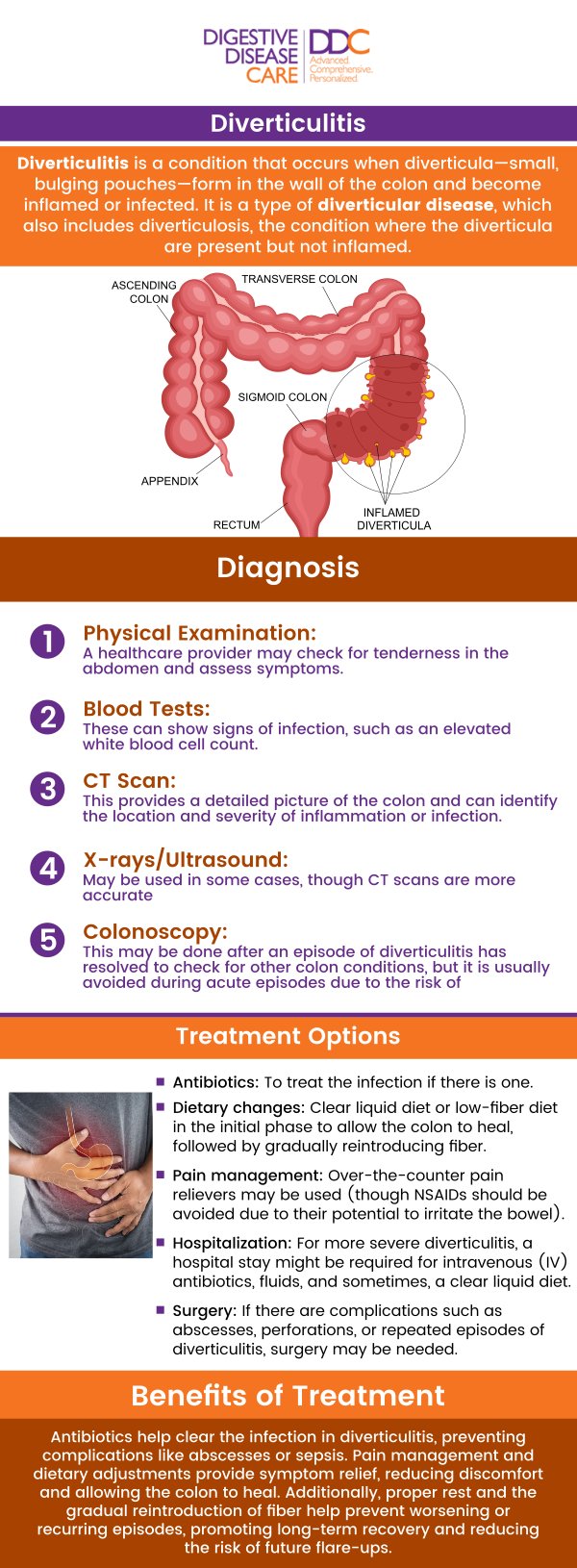
Table of Contents:
Why does diverticulitis cause diarrhea?
Is diarrhea a common symptom of diverticulitis?
How long does diarrhea last with diverticulitis?
When should I see a doctor for diarrhea with diverticulitis symptoms?
How Digestive Disease Care Can Help Manage Diarrhea Caused by Diverticulitis in Jericho, NY
Diverticulitis occurs when small pouches in the colon become inflamed or infected, often causing unexpected digestive symptoms. Among these, diarrhea is common, reflecting the colon’s response to inflammation and altered bowel function. Understanding why diarrhea occurs helps patients manage symptoms effectively.
• Inflammation in the colon increases fluid secretion into the stool.
• Disrupted colonic motility speeds up transit time, reducing water absorption.
• Irritated areas produce excess mucus, which mixes with stool.
• Immune system mediators (cytokines) affect intestinal fluid balance.
• Infection or inflammation can disturb the gut microbiome, worsening diarrhea.
• Cramping, pain, and stress responses can trigger looser stools.
• Antibiotics used for treatment may temporarily alter bowel habits.
• These combined factors reduce water absorption, producing watery, urgent bowel movements.
• Diarrhea is often accompanied by bloating, urgency, or abdominal cramping.
• Early recognition allows for proper hydration and symptom management.
By recognizing the physiological causes of diarrhea during diverticulitis, patients can better manage symptoms and communicate effectively with their gastroenterologist for timely treatment.
While diverticulitis is frequently associated with constipation, diarrhea is also a common symptom during flare-ups. Patients may notice loose stools alongside abdominal discomfort, making it important to understand this pattern.
• Diarrhea often occurs due to inflammation in the colon.
• Reduced water absorption from affected areas leads to watery stools.
• Bowel movements may alternate between diarrhea and constipation.
• IBS or other co-existing digestive conditions can amplify diarrhea.
• Certain foods, such as spicy or fatty meals, can worsen loose stools.
• Antibiotic treatment may trigger temporary diarrhea.
• Severity of inflammation typically correlates with the intensity of diarrhea.
• Diarrhea may occur alongside cramping, bloating, and tenderness.
• Monitoring bowel changes can help identify diverticulitis flare-ups.
• Prompt management helps prevent complications and maintain hydration.
Understanding that diarrhea is part of the symptom spectrum allows patients and clinicians to differentiate diverticulitis from other gastrointestinal disorders and respond appropriately.
The duration of diarrhea varies depending on the severity of inflammation, treatment, and individual factors. Patients often experience short-term symptoms during acute flare-ups, but this timeline can differ.
• Mild diverticulitis: diarrhea may last 2–5 days.
• Treatment with antibiotics or anti-inflammatories usually improves symptoms within 48–72 hours.
• Moderate to severe cases can extend diarrhea for 1–2 weeks.
• Antibiotic-associated diarrhea may persist for several days after treatment.
• Dietary adjustments can influence stool consistency during recovery.
• Chronic or recurrent diverticulitis may cause alternating diarrhea and constipation.
• Complications, such as abscesses or perforation, can prolong diarrhea.
• Age, hydration, gut motility, and immune status influence symptom duration.
• Close monitoring helps determine if follow-up care is needed.
• Recovery generally occurs within a week when managed properly.
By understanding typical timelines, patients can gauge when diarrhea is a normal symptom versus when medical intervention may be necessary.
Not all diarrhea requires urgent attention, but certain warning signs indicate the need for immediate evaluation. Knowing when to contact a doctor can prevent complications and ensure timely care.
• Severe or worsening abdominal pain should prompt a visit.
• High fever or chills may indicate infection.
• Blood in stool or black, tarry stools requires immediate evaluation.
• Dehydration signs, including dizziness or low urine output, are critical.
• Persistent diarrhea lasting more than 48–72 hours warrants assessment.
• Vomiting or inability to eat alongside diarrhea needs attention.
• History of complicated diverticulitis increases risk of severe outcomes.
• Escalating or unusual symptoms should not be ignored.
• Older adults and those with weakened immunity should seek early care.
• Timely evaluation reduces the risk of abscess, perforation, or hospitalization.
Prompt medical assessment ensures appropriate treatment and prevents diverticulitis complications from becoming severe or life-threatening.
Digestive Disease Care in Jericho, NY, provides management for diarrhea caused by diverticulitis. Our board-certified gastroenterologists evaluate each patient thoroughly, using a combination of medical history, stool analysis, laboratory testing, and imaging to pinpoint the cause and severity of symptoms. We tailor treatment plans to address inflammation, restore gut balance, and manage diarrhea effectively, while providing guidance on hydration and symptom relief.
In addition to personalized treatment, Digestive Disease Care offers dietary counseling and follow-up monitoring to ensure long-term digestive health. For urgent cases, patients can access same-day appointments through our Gastro Fast Trak program, ensuring prompt care when flare-ups occur. By combining specialist expertise, advanced diagnostics, and patient-centered support, we help individuals regain comfort and maintain optimal gastrointestinal function. For more information, contact us or schedule an appointment. We are conveniently located at 366 N Broadway, Suite LW-2-B, Jericho, NY 11753. We serve patients from Jericho NY, Plainview NY, Mineola NY, Levittown NY, Farmingdale NY, Syosset NY, and surrounding areas.

Check Out Our 5 Star Reviews


Additional Services You May Like

Additional Services You May Like
- Abdominal Pain
- Acid Reflux
- Barretts Esophagus
- Bloating
- Capsule Endoscopy
- Celiac Disease
- Colon Cancer Screening
- Colonoscopy
- Constipation
- Crohns Disease
- Diarrhea
- Diverticulitis
- Esophageal PH Monitoring
- Fatty Liver
- Fibroscan
- Gallstones
- Gastroenterologist
- Gastric Chest Pain
- Gluten Intolerance
- Hemorrhoid
- Hemorrhoid Banding
- Hepatitis
- Irritable Bowel Syndrome
- Lactose Intolerance
- Pancreatitis
- Polyps
- Rectal Bleeding
- Stomach
- Ulcerative Colitis
- GI Urgent Care


 Send Text
 How May I Help You?