

Fatty Liver Disease Treatment and Management for Long-Term Liver Wellness
Fatty liver disease treatment focuses on identifying contributing factors, improving liver health, and supporting long-term wellness through personalized care. Understanding lifestyle influences, risk factors, and available management approaches can help patients take proactive steps toward better liver function. Board-certified gastroenterologists at Digestive Disease Care (DDC) in Jericho, NY provide comprehensive evaluations to understand each patient’s liver health needs. Our team works with patients to develop individualized strategies for managing fatty liver disease and promoting overall digestive wellness. For more information contact us or schedule an appointment. We are conveniently located at 366 N Broadway Suite LW-2-B, Jericho, NY 11753.
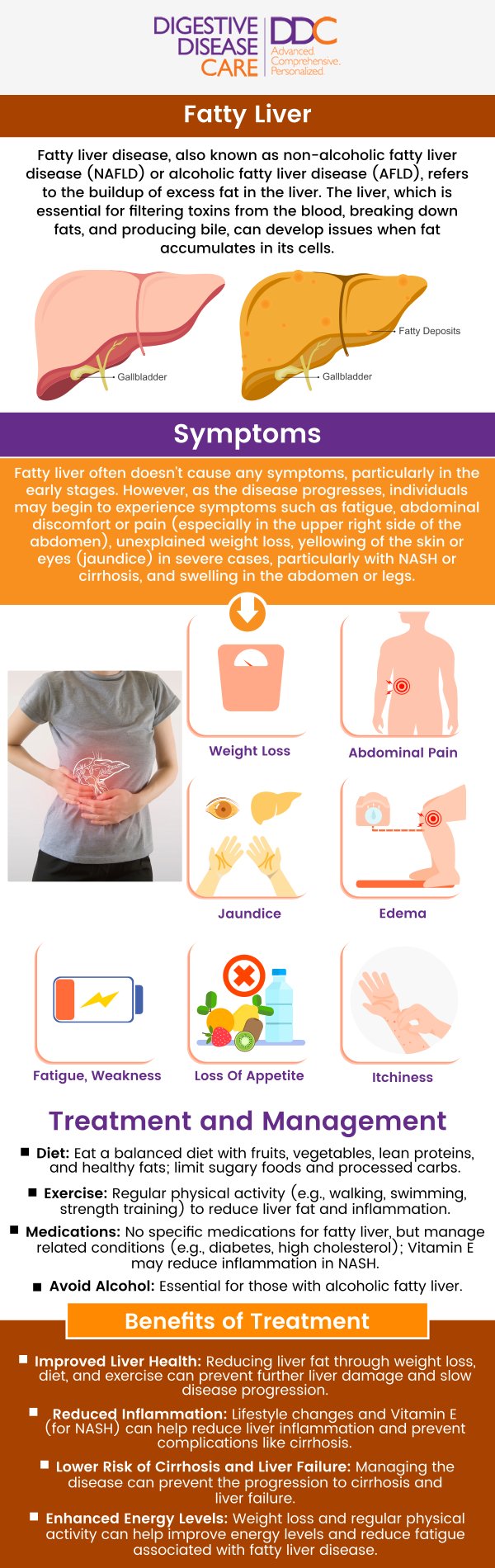
Table of Contents:
How does a gastroenterologist diagnose fatty liver disease?
What lifestyle changes can support fatty liver disease management?
Can fatty liver disease improve with proper treatment and care?
What factors increase the risk of developing fatty liver disease?
Supporting Long-Term Liver Wellness With Fatty Liver Disease Care From Board-Certified Gastroenterologists at Digestive Disease Care (DDC) in Jericho, NY
Fatty liver disease occurs when excess fat builds up in the liver, which may affect how the liver functions over time. While some individuals may not notice symptoms in the early stages, ongoing liver changes can increase the need for proper evaluation and management. Understanding the causes, risk factors, and available care approaches can help support long-term liver wellness.
At Digestive Disease Care (DDC), our board-certified gastroenterologists in Jericho, NY provide personalized evaluations for patients with liver concerns. Our team focuses on understanding each patient’s health history, lifestyle factors, and individual needs to help create an appropriate approach for managing fatty liver disease.
Diagnosing fatty liver disease involves evaluating your overall health, symptoms, medical history, and potential risk factors. Since fatty liver disease may not always cause noticeable symptoms, routine evaluation and appropriate testing can help identify changes in the liver.
During an evaluation, a gastroenterologist may review:
• Medical history: Information about existing health conditions, medications, and family history may provide important details.
• Lifestyle factors: Diet, activity levels, alcohol intake, and daily habits may be discussed.
• Symptoms: Although many people have no symptoms, some may experience fatigue, abdominal discomfort, or general feelings of unwellness.
• Blood test results: Liver enzyme levels and other markers may provide information about liver health.
Additional testing may be recommended depending on your symptoms and evaluation results. These may include:
• Imaging tests: Ultrasound or other imaging methods may help identify fat accumulation in the liver.
• Specialized liver assessments: Certain tests may help evaluate liver stiffness or possible scarring.
• Additional laboratory testing: Blood work may help assess liver function and rule out other possible causes of liver changes.
A complete evaluation allows a gastroenterologist to better understand the severity of fatty liver disease and determine appropriate management recommendations.
Lifestyle adjustments play an important role in managing fatty liver disease and supporting overall liver health. Small, consistent changes can help improve metabolic health and reduce factors that contribute to fat buildup in the liver.
Helpful lifestyle approaches may include:
Maintaining a Balanced Diet
A nutrient-rich eating pattern can support liver wellness. Helpful dietary habits may include:
• Choosing more fruits, vegetables, whole grains, and lean proteins
• Limiting foods high in added sugars and unhealthy fats
• Reducing highly processed foods
• Maintaining appropriate portion sizes
• Following a consistent meal routine
Staying Physically Active
Regular physical activity may support better liver health by improving metabolism and helping manage factors associated with fatty liver disease.
Examples of healthy activity habits include:
• Engaging in regular movement throughout the week
• Including activities that support cardiovascular health
• Building an exercise routine based on individual abilities and health goals
Supporting Overall Wellness
Additional lifestyle habits that may benefit liver health include:
• Maintaining a healthy weight when appropriate
• Managing blood sugar levels
• Monitoring cholesterol levels
• Avoiding excessive alcohol consumption
• Following recommended medical care plans
Lifestyle changes should be personalized based on your health needs. A gastroenterology team can help guide appropriate steps for managing fatty liver disease while considering your overall wellness.
Fatty liver disease may improve when the underlying factors contributing to fat buildup are addressed. Early recognition, consistent lifestyle changes, and ongoing medical guidance can play an important role in supporting liver health.
Management strategies may focus on:
• Reducing factors that contribute to liver fat accumulation
• Supporting healthy metabolic function
• Monitoring changes in liver health over time
• Addressing related conditions such as high cholesterol or blood sugar concerns
• Preventing progression of liver-related complications
• The response to management can vary depending on factors such as the amount of liver fat, overall health, lifestyle habits, and whether additional liver changes are present.
Regular follow-up with a gastroenterologist can help monitor progress and adjust recommendations when needed. A personalized approach allows care decisions to be based on your specific health situation rather than a one-size-fits-all plan.
Several health and lifestyle factors may increase the likelihood of developing fatty liver disease. Understanding these risk factors can help individuals recognize when liver evaluation may be beneficial.
Common risk factors may include:
• Excess body weight: Increased body weight may contribute to fat accumulation in the liver.
• Insulin resistance: Changes in how the body processes blood sugar may be associated with fatty liver development.
• Type 2 diabetes: Diabetes can increase the risk of liver fat buildup.
• High cholesterol or triglyceride levels: Elevated blood fats may contribute to liver changes.
• Poor dietary patterns: Diets high in added sugars, processed foods, or unhealthy fats may affect liver health.
• Limited physical activity: A sedentary lifestyle may increase metabolic risk factors.
• Certain medications or health conditions: Some medical factors may influence liver health.
Having one or more risk factors does not always mean someone will develop fatty liver disease. However, understanding these factors and discussing them with a healthcare professional can help support early evaluation and preventive care.
Fatty liver disease management involves understanding the condition, identifying contributing factors, and making personalized changes that support long-term liver wellness. With proper evaluation and ongoing care, many individuals can take important steps toward improving liver health and reducing future concerns.
At Digestive Disease Care (DDC) in Jericho, NY, our board-certified gastroenterologists provide comprehensive liver and digestive care tailored to each patient’s needs. Our team evaluates fatty liver disease concerns, recommends appropriate testing when needed, and helps patients develop personalized strategies to support healthier liver function and overall wellness. For more information, contact us or schedule an appointment. We are conveniently located at 366 N Broadway Suite LW-2-B, Jericho, NY 11753. We serve patients from Jericho NY, Plainview NY, Mineola NY, Levittown NY, Farmingdale NY, Syosset NY, and surrounding areas.

Check Out Our 5 Star Reviews


Additional Services You May Like

Additional Services You May Like
- Abdominal Pain
- Acid Reflux
- Barretts Esophagus
- Bloating
- Capsule Endoscopy
- Celiac Disease
- Colon Cancer Screening
- Colonoscopy
- Constipation
- Crohns Disease
- Diarrhea
- Diverticulitis
- Esophageal PH Monitoring
- Fatty Liver
- Fibroscan
- Gallstones
- Gastroenterologist
- Gastric Chest Pain
- Gluten Intolerance
- Hemorrhoid
- Hemorrhoid Banding
- Hepatitis
- Irritable Bowel Syndrome
- Lactose Intolerance
- Pancreatitis
- Polyps
- Rectal Bleeding
- Stomach
- Ulcerative Colitis
- GI Urgent Care


 Send Text
 How May I Help You?