

How Can Upper Endoscopy (EGD) Help Diagnose Digestive Disorders in Mineola, NY?
An upper endoscopy (EGD) is a valuable diagnostic tool that allows doctors to directly examine the lining of the upper digestive tract, including the esophagus, stomach, and duodenum. This procedure helps identify conditions such as ulcers, inflammation, and abnormal growths, providing a clear picture of your digestive health. Our team of board-certified specialists at Digestive Disease Care in Mineola, NY, uses EGD to accurately diagnose and develop personalized treatment plans for digestive disorders. For more information, contact us today or book an appointment online. We are conveniently located at 137 Willis Ave Suite 110 2nd Floor, Mineola, NY 11501.
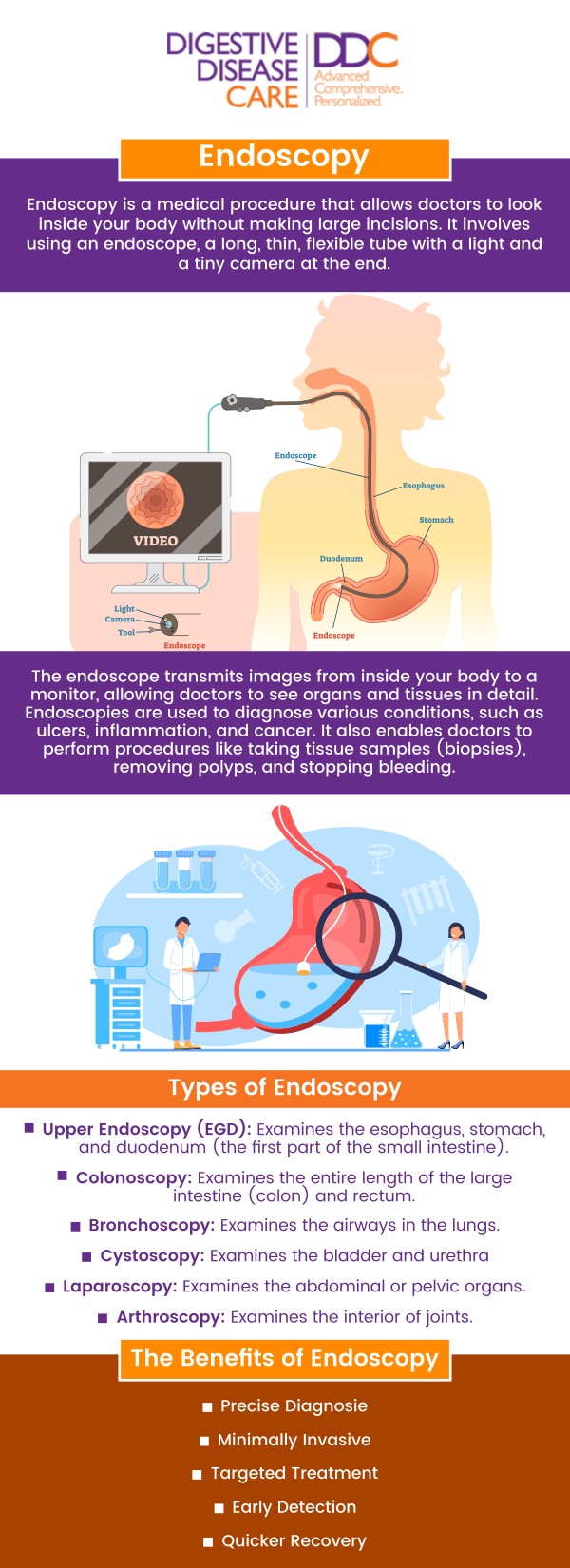

Table of Contents:
What are the benefits of an upper endoscopy (EGD)?
How can an upper endoscopy (EGD) help in diagnosing digestive issues?
Can upper endoscopy (EGD) help monitor existing conditions?
How long does it take to recover from an upper endoscopy (EGD)?
Comprehensive Digestive Disorder Diagnosis with Upper Endoscopy (EGD) by Our Team in Mineola, NY
An upper endoscopy (EGD) is a valuable diagnostic and therapeutic procedure that examines the upper digestive tract — including the esophagus, stomach, and the first section of the small intestine (duodenum) — using a thin, flexible tube with a camera and light on the end. This minimally invasive procedure provides a direct view of the mucosal lining, allowing physicians to see abnormalities that other tests may miss.
Key benefits of an upper endoscopy (EGD) include:
• Direct visualization: Doctors can see the actual tissue of the upper digestive tract rather than relying on indirect imaging alone.
• Early detection: It helps identify issues such as inflammation, ulcers, strictures, and abnormal growths before they become severe.
• Targeted biopsies: Tissue samples can be taken during the procedure for laboratory analysis, which is critical for diagnosing infections, celiac disease, Barrett’s esophagus, and cancer.
• Therapeutic capability: Some problems — for example, bleeding vessels, polyps, or narrowed areas — can be treated during the same procedure.
• Accurate diagnosis: It is one of the most precise methods to investigate persistent symptoms such as heartburn, upper abdominal pain, or nausea.
Many adults who undergo an EGD find that it delivers answers quickly, sometimes during the procedure itself. Since it is both diagnostic and potentially therapeutic, an upper endoscopy reduces the need for multiple separate tests and can accelerate the path to effective treatment.
An upper endoscopy (EGD) plays an essential role in diagnosing a wide range of upper gastrointestinal conditions. Symptoms such as chronic heartburn, nausea, recurring upper abdominal pain, difficulty swallowing, or unexplained weight loss can stem from problems that are not always visible on X‑rays or CT scans. Because an EGD provides a direct view of the digestive lining, it allows gastroenterologists to spot subtle changes in tissue that may indicate disease.
Conditions often diagnosed with an upper endoscopy include:
• Gastroesophageal reflux disease (GERD) and esophagitis
• Peptic ulcers in the stomach and duodenum
• Inflammation of the esophagus or stomach lining
• Barrett’s esophagus, a precancerous change due to chronic reflux
• Strictures or narrowing of the esophagus
• Bleeding sources such as erosions or vascular abnormalities
• Tumors or polyps, both benign and cancerous
• Infections including H. pylori when biopsies are tested
During the EGD, the gastroenterologist can take biopsies — tiny tissue samples — for more detailed microscopic evaluation. This is particularly helpful when symptoms are vague or when blood tests and imaging results are inconclusive. Biopsy results may confirm inflammation, infection, or precancerous changes and guide the next steps in care.
By combining high‑definition imaging with real‑time assessment, EGD is one of the most powerful tools in digestive health evaluation, helping doctors deliver accurate diagnoses and targeted treatment plans.
Yes — upper endoscopy (EGD) is not only a diagnostic test but also a monitoring tool for patients with known digestive conditions. For individuals with chronic gastrointestinal diseases, periodic EGDs allow physicians to assess how well a treatment is working and detect changes over time.
Conditions often monitored with EGD include:
• Barrett’s esophagus: Regular surveillance to watch for precancerous changes
• Peptic ulcer disease: Evaluation of healing and response to medications
• Esophageal strictures: Assessment after dilation procedures or ongoing inflammation
• Chronic gastritis: Monitoring progression or response to therapy
• Post‑treatment assessment: After therapy for infections or tissue abnormalities
Monitoring with an EGD is especially valuable when symptoms return or worsen, when blood work indicates unresolved inflammation, or when imaging raises concerns. By providing a direct visual assessment, the gastroenterologist can compare current findings with previous results to make informed decisions about adjusting medications, recommending lifestyle changes, or continuing surveillance at regular intervals.
For adults with chronic digestive conditions, EGD helps ensure that disease management remains effective and that potential complications are caught early.
Recovery from an upper endoscopy (EGD) is typically quick and straightforward, especially compared with surgical procedures. Because the exam is performed with light sedation and uses a flexible endoscope rather than incisions, most patients go home the same day.
What to expect in the recovery period:
• Immediate post‑procedure: You will rest briefly in a recovery area until the sedative wears off — usually within 30–60 minutes.
• Same‑day effects: Mild throat discomfort, bloating, or gas may occur but generally improve within hours.
• Activity restrictions: Avoid driving, operating heavy machinery, or making important decisions for the rest of the day due to sedation effects.
• Eating and drinking: You can typically resume fluids and then light meals shortly after the procedure, following your doctor’s guidance.
Most adults feel back to their normal routine by the next day. If a biopsy was taken or a therapeutic procedure was performed (such as polyp removal), your doctor will provide specific post‑care instructions to ensure proper healing. Rarely, more significant discomfort or complications like bleeding or perforation may occur; if severe pain, fever, or unusual symptoms develop, contact your healthcare provider immediately.
Overall, upper endoscopy is well tolerated and considered a safe procedure with a short recovery timeline.
If you’re struggling with persistent heartburn, upper abdominal pain, difficulty swallowing, or unexplained nausea, an upper endoscopy (EGD) can be a crucial step toward understanding the root cause of your symptoms. This minimally invasive procedure allows your gastroenterologist to visually examine the lining of your upper digestive tract and collect targeted biopsies when needed, leading to fast, accurate diagnosis and faster treatment decisions.
At Digestive Disease Care in Mineola, NY, our experienced gastroenterology team provides upper endoscopy services designed with your comfort, safety, and digestive health in mind. We understand that unexplained digestive symptoms can impact your quality of life, and we are here to offer clarity and direction. With advanced technology and a patient‑focused approach, our clinic ensures a smooth and supportive experience from preparation through recovery.
In Mineola and the surrounding Long Island communities, individuals benefit from high‑quality care tailored to their unique digestive health needs. Whether you’re seeking answers for chronic symptoms or need monitoring of a known condition, our skilled providers use upper endoscopy as a powerful tool to guide personalized treatment plans. From diagnosis to long‑term management, our commitment is to help you achieve lasting digestive wellness.
Choose Comprehensive Digestive Disorder Diagnosis with Upper Endoscopy (EGD) at Digestive Disease Care in Mineola, NY, for detailed evaluation, thoughtful care planning, and support every step of the way. For more information, contact us today or book an appointment online. We are conveniently located at 137 Willis Ave Suite 110 2nd Floor, Mineola, NY 11501. We serve patients from Mineola NY, Uniondale NY, Queens NY, Floral Park NY, Roslyn NY, Plainview NY, and surrounding areas.

Check Out Our 5 Star Reviews


Additional Services You May Like

Additional Services You May Like
- Abdominal Pain
- Acid Reflux
- Barretts Esophagus
- Bloating
- Capsule Endoscopy
- Celiac Disease
- Colon Cancer Screening
- Colonoscopy
- Constipation
- Crohns Disease
- Diarrhea
- Diverticulitis
- Esophageal PH Monitoring
- Fatty Liver
- Fibroscan
- Gallstones
- Gastroenterologist
- Gastric Chest Pain
- Gluten Intolerance
- Hemorrhoid
- Hemorrhoid Banding
- Hepatitis
- Irritable Bowel Syndrome
- Lactose Intolerance
- Pancreatitis
- Polyps
- Rectal Bleeding
- Stomach
- Ulcerative Colitis
- GI Urgent Care


 Send Text
 How May I Help You?