

What Are the Treatment Options for Diverticulitis in East Setauket, NY?
Navigating treatment options for diverticulitis in East Setauket, NY, requires guidance to manage painful flare-ups and protect your long-term colon health. Whether your condition requires conservative management with dietary changes and antibiotics or more advanced interventions for severe cases, Dr. Preeti Mehta, MD, and the skilled team at Digestive Disease Care are equipped to help. By conducting a thorough evaluation of your digestive system, they will pinpoint the extent of the inflammation and tailor a personalized recovery plan. For more information, contact us today or schedule an appointment online. We are conveniently located at 235 N Belle Mead Rd, Setauket- East Setauket, NY 11733.
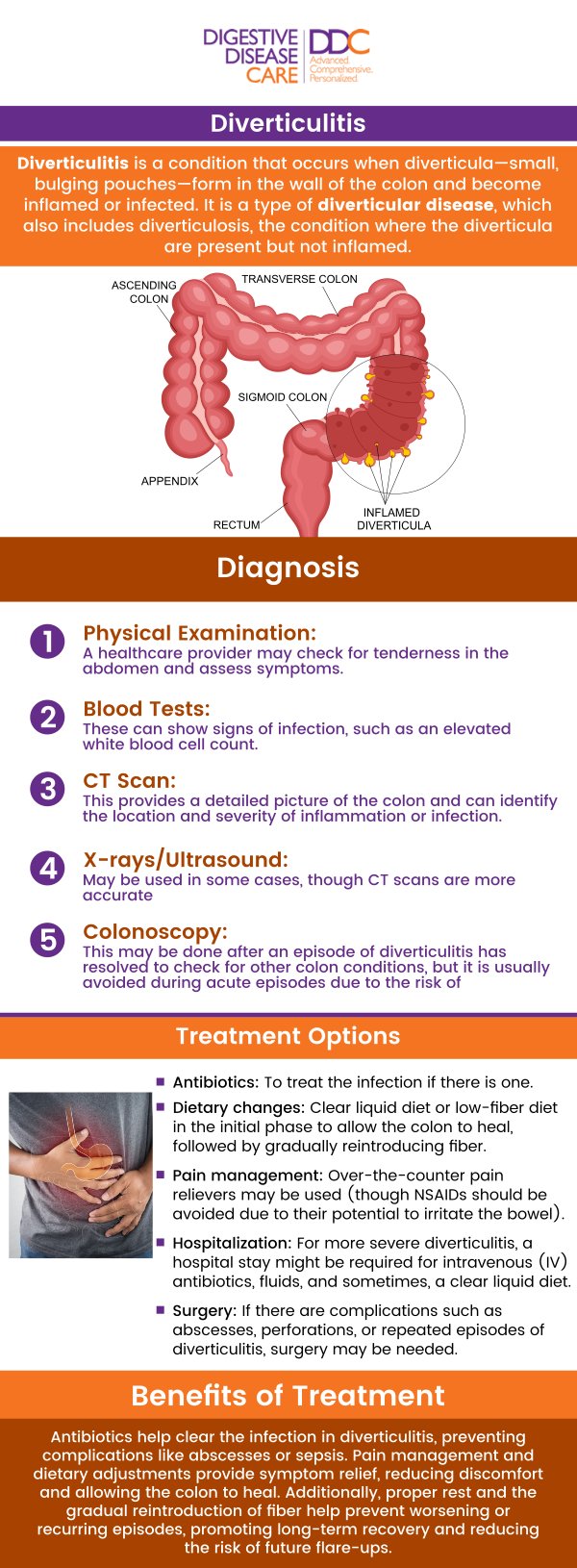
Table of Contents:
Can diverticulitis reoccur?
When should I see a doctor for diverticulitis symptoms?
How long does it take to recover from diverticulitis?
Can diverticulitis cause complications?
Managing Diverticulitis Effectively with Dr. Preeti Mehta, MD at Digestive Disease Care in East Setauket, NY
Yes, diverticulitis can recur. Diverticulitis is the inflammation or infection of small pouches (diverticula) that develop in the lining of the digestive tract, most commonly in the lower portion of the large intestine (colon). Even after a successful treatment episode, these pouches remain present, and recurrence is possible, especially if the underlying risk factors are not addressed.
Recurrent diverticulitis may follow initial episodes of inflammation, and the risk varies with the severity and frequency of symptoms. While some adults experience only a single episode that resolves with treatment, others have repeated flare‑ups over time.
Key factors associated with recurrence include:
• Severity of prior episodes: More severe cases may have a higher likelihood of recurrence.
• Lifestyle factors: Poor diet, low fiber intake, lack of physical activity, and obesity may contribute to repeated inflammation.
• Chronic constipation: Straining during bowel movements can put pressure on the colon wall.
• Smoking and certain medications: These can negatively impact digestive health.
Although not all individuals with diverticulosis (presence of diverticula) develop diverticulitis, recurrence is a concern that merits attention. Effective long‑term management through dietary changes, regular medical follow‑up, and lifestyle modifications can help reduce the frequency of repeat episodes and support overall colon health.
Prompt medical evaluation is essential if diverticulitis is suspected. Because untreated diverticulitis can lead to significant discomfort and serious complications, recognizing symptoms early and seeking care from a specialist provides the best opportunity for effective management and recovery.
Seek medical attention if you notice symptoms such as:
• Persistent abdominal pain: Often on the left side of the lower abdomen
• Fever and chills
• Nausea or vomiting
• Tenderness in the abdomen
• Constipation or diarrhea
• Blood in the stool
Not all abdominal pain signals diverticulitis, but when pain is accompanied by fever, changes in bowel habits, or signs of infection, evaluation by a healthcare provider is recommended. Immediate care may be needed If symptoms are severe, such as intense pain that doesn’t improve, high fever, or fainting.
Specialized care from a gastroenterologist or colorectal specialist ensures accurate diagnosis and personalized treatment planning. In regions like East Setauket, NY, patients can access high‑quality digestive care close to home.
Recovery from diverticulitis varies based on the severity of the episode and how quickly treatment begins. Mild cases that are treated early often resolve more quickly, while complicated or severe episodes may require extended care.
Typical recovery timeline includes:
• Acute episode: Symptoms of mild diverticulitis may begin improving within 2–3 days of starting treatment.
• Full recovery: Most adults experience significant improvement within 7–10 days with proper diet modifications, rest, and prescribed medications.
During the recovery period, doctors commonly recommend:
• Clear liquid diet initially to rest the digestive system
• Antibiotic therapy, when bacterial infection is present
• Pain management and careful monitoring
• Gradual return to a high‑fiber diet once inflammation subsides
Following your healthcare provider’s guidance and completing the full treatment course are essential to reduce symptoms, prevent complications, and decrease the chance of recurrence.
Yes—especially when left untreated or if symptoms are severe—diverticulitis can lead to several serious complications that require immediate medical intervention.
Potential complications include:
• Abscess formation: Localized pockets of infection near the inflamed pouches.
• Perforation: A tear in the colon wall, which can lead to infection of the abdominal cavity (peritonitis).
• Fistula: An abnormal connection between the colon and another organ, such as the bladder or skin.
• Bowel obstruction: Scar tissue and inflammation may block normal digestive flow.
• Sepsis: If infection spreads into the bloodstream, it can become life‑threatening.
If symptoms intensify—such as high fever, persistent nausea, sudden severe pain, or signs of internal bleeding—patients should seek urgent care. These complications can be serious and may require advanced medical management.
Long‑term follow‑up and preventive strategies, including diet and lifestyle adjustments, help reduce the risk of complications and improve digestive health over time.
If you’re dealing with diverticulitis or suspect a flare‑up, expert care from a gastroenterology specialist can make a meaningful difference in your recovery and long‑term health. In East Setauket, NY, Dr. Preeti Mehta, MD, and the skilled team at Digestive Disease Care provide comprehensive evaluation, diagnosis, and personalized treatment plans for adults experiencing diverticulitis symptoms.
Dr. Mehta is a board‑certified gastroenterologist with extensive experience in diagnosing and managing digestive tract conditions, including diverticulitis and diverticular disease. She understands that symptoms such as abdominal pain, fever, and changes in bowel habits can be disruptive and concerning, and she works closely with patients to determine the most effective treatment path based on individual health profiles.
At Digestive Disease Care, your care plan begins with a thorough clinical assessment, diagnostic testing—including imaging and lab work when necessary—and a clear explanation of your condition. Dr. Mehta emphasizes patient education, helping you understand not only what diverticulitis is but why it occurs and how lifestyle changes can reduce recurrence.
How Dr. Preeti Mehta and her team support diverticulitis care:
• Accurate diagnosis: Through advanced testing and clinical evaluation
• Personalized treatment plans: Including medication, dietary guidance, and when appropriate, procedural care
• Lifestyle counseling: Emphasizing dietary fiber, hydration, and behaviors that support colon health
• Ongoing monitoring: To prevent recurrence and manage risk factors
Conveniently located for residents of East Setauket and surrounding areas in Suffolk County, Digestive Disease Care is committed to providing compassionate, expert digestive health care that helps you regain comfort and confidence. With Dr. Mehta’s guidance, patients receive the support they need to manage diverticulitis effectively and pursue lasting digestive wellness.
Whether you’re experiencing your first episode or seeking care for recurrent symptoms, seeking expert evaluation and individualized care can lead to better outcomes and a smoother recovery journey. For more information, contact us today or schedule an appointment online. We are conveniently located at 235 N Belle Mead Rd, Setauket- East Setauket, NY 11733. We serve patients from Setauket NY, Miller Place NY, Nesconset NY, Farmingville NY, Stony Brook NY, and Selden NY.

Check Out Our 5 Star Reviews


Additional Services You May Like

Additional Services You May Like
- Abdominal Pain
- Acid Reflux
- Barretts Esophagus
- Bloating
- Capsule Endoscopy
- Celiac Disease
- Colon Cancer Screening
- Colonoscopy
- Constipation
- Crohns Disease
- Diarrhea
- Diverticulitis
- Esophageal PH Monitoring
- Fatty Liver
- Fibroscan
- Gallstones
- Gastroenterologist
- Gastric Chest Pain
- Gluten Intolerance
- Hemorrhoid
- Hemorrhoid Banding
- Hepatitis
- Irritable Bowel Syndrome
- Lactose Intolerance
- Pancreatitis
- Polyps
- Rectal Bleeding
- Stomach
- Ulcerative Colitis
- GI Urgent Care


 Send Text
 How May I Help You?