

Ulcerative Colitis Flare-Ups: Symptoms, Triggers, and Management
Ulcerative colitis flare-ups can cause symptoms such as frequent diarrhea, abdominal cramping, rectal bleeding, urgency, and fatigue. Flare-ups may be influenced by factors such as infections, stress, treatment changes, or increased intestinal inflammation. Understanding personal triggers and recognizing early warning signs can help support more effective symptom management. At Digestive Disease Care, our board-certified gastroenterologists provide personalized evaluation and ongoing care to help patients manage ulcerative colitis flare-ups and maintain better digestive health. For more information, contact us today or schedule an appointment online. We are conveniently located at 750 Old Country Rd, Riverhead, NY 11901.
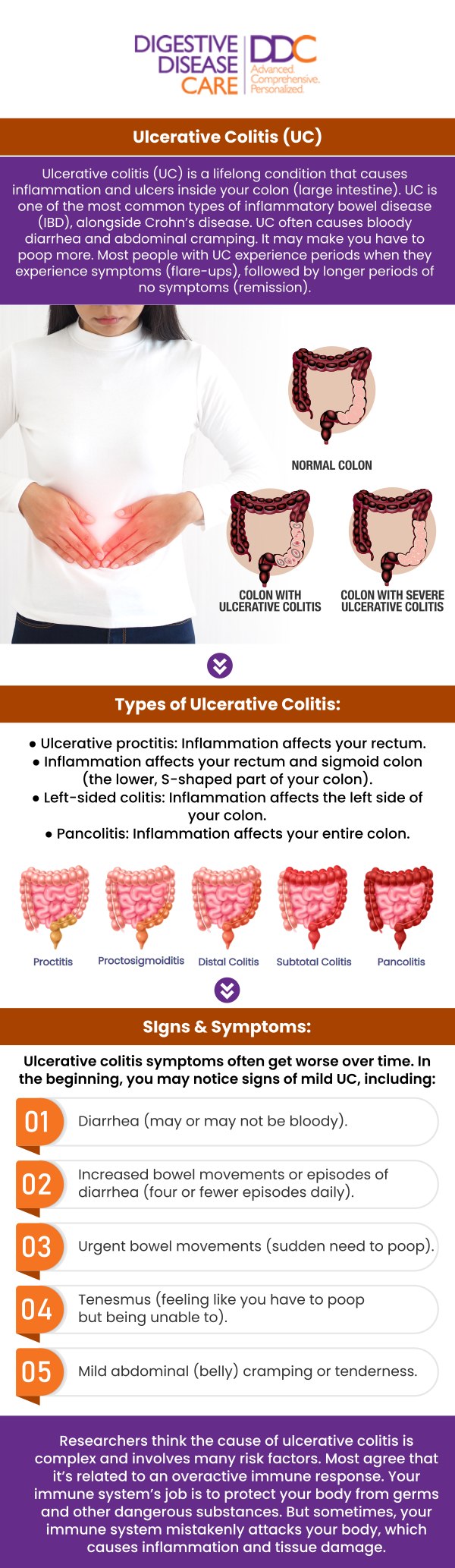
Table of Contents:
What are the common symptoms of an ulcerative colitis flare-up?
What factors can trigger an ulcerative colitis flare-up?
How long can an ulcerative colitis flare-up last?
When should you seek medical care for worsening ulcerative colitis symptoms?
At Digestive Disease Care, Our Board-Certified Gastroenterologists Help Manage Ulcerative Colitis Flare-Ups and Digestive Symptoms in Riverhead, NY
An ulcerative colitis flare-up occurs when inflammation in the colon becomes more active, causing symptoms to return or become more noticeable. The severity can vary depending on how much of the colon is affected and how active the inflammation is.
Common symptoms may include:
• Frequent diarrhea: Bowel movements may become more frequent, loose, or urgent during a flare.
• Blood in the stool: Rectal bleeding or blood mixed with stool can occur because the intestinal lining is inflamed.
• Abdominal pain and cramping: Inflammation can lead to discomfort, cramping, or tenderness, particularly before or during bowel movements.
• Urgent need to have a bowel movement: Some individuals experience sudden urgency and may have difficulty delaying a bowel movement.
• Mucus in the stool: Increased mucus production may occur when the lining of the colon is irritated.
• Rectal discomfort: People with inflammation affecting the rectum may experience pressure, pain, or the feeling that the bowel has not completely emptied.
• Fatigue: Ongoing inflammation, frequent bowel movements, poor sleep, dehydration, or blood loss may contribute to low energy.
• Reduced appetite or unintended weight loss: More active disease can interfere with eating habits and nutritional intake.
• Fever: A persistent or significant fever may occur during a more severe flare and should be evaluated.
Some people may also experience symptoms outside the digestive tract, including joint discomfort, skin changes, or eye irritation. Changes in symptoms should be discussed with a gastroenterology professional, especially when they are more severe than usual.
Ulcerative colitis symptoms do not always have a single identifiable trigger. However, several factors may contribute to worsening symptoms or make an existing flare more difficult to control.
Possible contributing factors include:
• Changes in a treatment plan: Missing doses, stopping treatment unexpectedly, or not following the recommended management plan may increase the likelihood of symptoms returning.
• Digestive infections: Certain bacterial, viral, or other gastrointestinal infections can produce symptoms similar to a flare or worsen existing inflammation.
• Emotional and physical stress: Stress does not cause ulcerative colitis, but it may affect digestion and make symptoms such as diarrhea, urgency, and abdominal discomfort more noticeable.
• Certain pain-relieving medications: Some commonly used medications can irritate the digestive tract in susceptible individuals. Patients should discuss medication use with their healthcare team.
• Dietary factors: Foods do not directly cause ulcerative colitis, but certain foods may worsen diarrhea, bloating, cramping, or discomfort during an active flare.
• Changes in sleep and daily routine: Poor sleep, travel, illness, or significant lifestyle disruptions can sometimes coincide with symptom changes.
• Smoking-related changes: Changes in smoking habits may affect ulcerative colitis differently among individuals, making professional guidance important.
• Underlying disease activity: In some cases, inflammation becomes active again without an obvious external trigger.
Keeping track of meals, bowel habits, stress levels, medications, and symptoms may help identify personal patterns. A gastroenterologist can also determine whether worsening symptoms represent a true inflammatory flare or another digestive problem.
The duration of an ulcerative colitis flare-up can differ substantially from person to person. Some mild episodes improve within several days or weeks, while more significant inflammation may continue for weeks or longer without appropriate management.
Several factors can influence how long symptoms continue, including:
• Severity of inflammation: Mild disease may settle more quickly than moderate or severe inflammation.
• Extent of colon involvement: Symptoms may vary depending on whether inflammation affects only the rectum, the left side of the colon, or a larger portion of the colon.
• How early treatment is adjusted: Prompt evaluation may help identify active inflammation and guide appropriate changes to the care plan.
• Response to treatment: Individuals respond differently, and some may require additional evaluation before symptoms are adequately controlled.
• Presence of infection: An infection occurring at the same time can prolong diarrhea and other digestive symptoms.
• Overall health and nutritional status: Dehydration, anemia, poor nutrition, and other health concerns may affect recovery.
Even after bowel symptoms begin improving, intestinal inflammation may take additional time to settle. For this reason, symptom improvement alone does not always indicate that inflammation has completely resolved.
Patients should avoid assuming that persistent symptoms are simply part of a normal flare. Ongoing diarrhea, bleeding, abdominal pain, fatigue, or repeated flare-ups warrant medical evaluation so the underlying disease activity can be assessed.
People living with ulcerative colitis should contact their healthcare team when symptoms become noticeably worse, occur more frequently, or differ from their usual pattern. Early evaluation can help determine whether symptoms are related to active ulcerative colitis, infection, dehydration, anemia, or another condition.
Medical evaluation is especially important for:
• Increasing frequency of bowel movements
• New or worsening blood in the stool
• Persistent abdominal pain or cramping
• Significant fatigue or weakness
• Reduced appetite or unintended weight loss
• Symptoms that interfere with sleep or normal daily activities
• Persistent diarrhea despite following the recommended care plan
• Symptoms that repeatedly return after periods of improvement
Urgent medical attention may be necessary when symptoms include severe or rapidly worsening abdominal pain, heavy rectal bleeding, persistent vomiting, significant abdominal swelling, fainting, confusion, difficulty staying hydrated, a high or persistent fever, or signs of severe weakness.
Severe ulcerative colitis can occasionally lead to serious complications, making timely assessment important when symptoms change substantially. Patients who are uncertain about the seriousness of their symptoms should contact their medical team rather than waiting for symptoms to become more severe.
At Digestive Disease Care, our board-certified gastroenterologists provide individualized evaluation and ongoing support for people experiencing ulcerative colitis symptoms in Riverhead, NY. Our team carefully reviews bowel patterns, abdominal symptoms, bleeding, previous flare-ups, medical history, and other factors that may help determine the level of disease activity.
Our approach may include:
• Evaluating new or worsening digestive symptoms
• Reviewing possible flare triggers and changes in bowel habits
• Assessing whether additional diagnostic testing may be appropriate
• Monitoring inflammation and overall digestive health
• Helping patients understand symptom patterns and warning signs
• Developing an individualized long-term management strategy
• Providing guidance for maintaining digestive health between flare-ups
Because ulcerative colitis can change over time, regular follow-up is an important part of managing the condition. Our team works with patients to recognize early signs of worsening inflammation, monitor their response to care, and address concerns before symptoms become more disruptive.
At Digestive Disease Care, our goal is to help individuals in Riverhead, NY better understand their ulcerative colitis, manage flare-ups appropriately, and maintain greater comfort and confidence in their digestive health. For more information, contact us today or schedule an appointment online. We are conveniently located at 750 Old Country Rd, Riverhead, NY 11901. We serve patients from Riverhead NY, Manorville NY, Westhampton NY, Calverton NY, Mattituck NY, and East Quogue NY.

Check Out Our 5 Star Reviews


Additional Services You May Like

Additional Services You May Like
- Abdominal Pain
- Acid Reflux
- Barretts Esophagus
- Bloating
- Capsule Endoscopy
- Celiac Disease
- Colon Cancer Screening
- Colonoscopy
- Constipation
- Crohns Disease
- Diarrhea
- Diverticulitis
- Esophageal PH Monitoring
- Fatty Liver
- Fibroscan
- Gallstones
- Gastroenterologist
- Gastric Chest Pain
- Gluten Intolerance
- Hemorrhoid
- Hemorrhoid Banding
- Hepatitis
- Irritable Bowel Syndrome
- Lactose Intolerance
- Pancreatitis
- Polyps
- Rectal Bleeding
- Stomach
- Ulcerative Colitis
- GI Urgent Care


 Send Text
 How May I Help You?