

How Does Ulcerative Colitis Affect the Colon and Digestive System?
Ulcerative colitis causes chronic inflammation in the inner lining of the colon and rectum, which can lead to ongoing digestive discomfort. This inflammation may result in diarrhea, rectal bleeding, abdominal cramping, bowel urgency, and changes in normal bowel habits. Over time, persistent inflammation can affect overall colon health and may require regular monitoring to reduce the risk of complications. At Digestive Disease Care, our board-certified gastroenterologists provide personalized care to help patients manage ulcerative colitis and support long-term digestive health. For more information, contact us today or schedule an appointment online. We are conveniently located at 373 W Main St, Babylon, NY 11702.
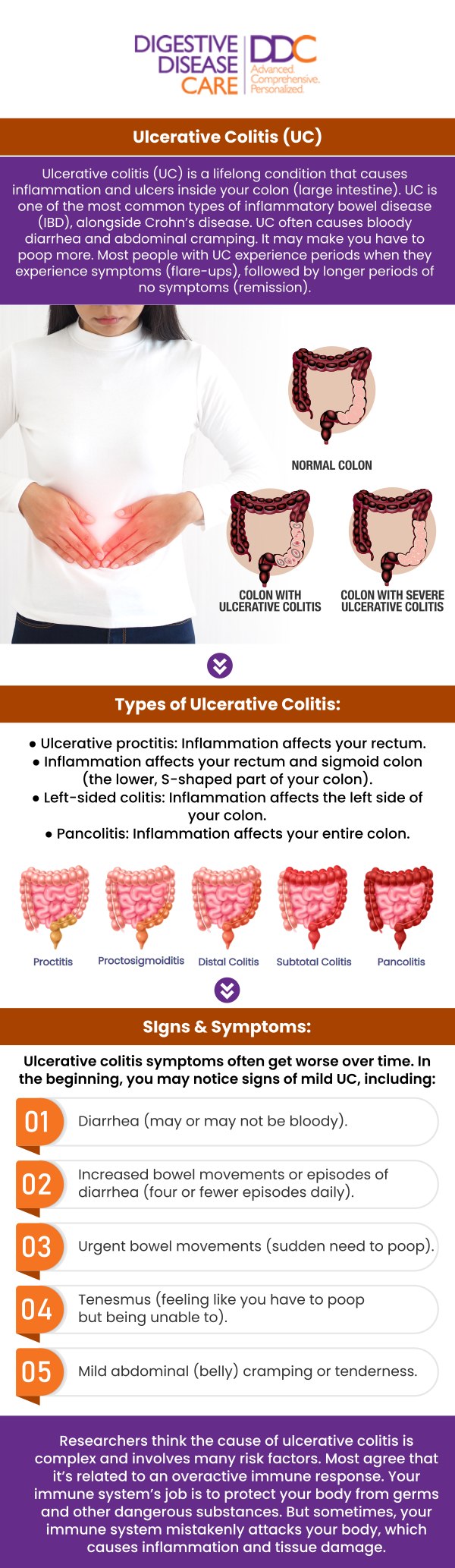
Table of Contents:
Which parts of the colon can be affected by ulcerative colitis?
How does ulcerative colitis cause inflammation in the digestive tract?
What digestive symptoms can result from ulcerative colitis?
Can long-term ulcerative colitis affect overall colon health?
At Digestive Disease Care, Our Board-Certified Gastroenterologists Provide Personalized Care for Ulcerative Colitis in Babylon, NY
Ulcerative colitis is a chronic inflammatory bowel disease that affects the inner lining of the large intestine, including the colon and rectum. Inflammation usually begins in the rectum and may extend continuously into other sections of the colon. The amount of the colon involved can vary from one person to another.
Ulcerative colitis may affect different areas, including:
• Rectum: When inflammation is limited to the rectum, it is commonly called ulcerative proctitis.
• Rectum and sigmoid colon: Inflammation may extend into the lower portion of the colon.
• Left side of the colon: Disease may involve the rectum and continue through the descending colon.
• Entire colon: In more extensive cases, inflammation may involve most or all of the colon.
The location and extent of inflammation can influence symptoms and treatment decisions. Some people may have relatively limited disease, while others experience inflammation throughout a larger portion of the colon. Regular evaluation can help determine the extent of ulcerative colitis and monitor changes over time.
Ulcerative colitis develops when ongoing inflammation affects the inner lining of the colon and rectum. Although its exact cause is not completely understood, it is believed to involve an abnormal immune response combined with genetic and environmental factors.
During active ulcerative colitis, the immune system contributes to persistent irritation and inflammation in the colon. The intestinal lining may become swollen, fragile, and irritated. Small ulcers can form along the surface, which may lead to bleeding, mucus, diarrhea, and abdominal discomfort.
Ulcerative colitis commonly alternates between periods of active symptoms and remission. During a flare-up, inflammation increases and digestive symptoms may become more noticeable. During remission, symptoms may improve significantly or temporarily disappear. Managing inflammation is an important part of protecting digestive health over time.
Ulcerative colitis can cause a variety of digestive symptoms depending on the severity of inflammation and how much of the colon is affected. Symptoms may develop gradually or become more intense during a flare-up.
Common digestive symptoms may include:
• Frequent or persistent diarrhea
• Blood in the stool
• Rectal bleeding
• Abdominal pain or cramping
• Mucus in the stool
• Sudden urgency to have a bowel movement
• Frequent bowel movements
• Rectal discomfort
• A feeling that the bowel has not completely emptied
• Changes in usual bowel habits
People with more active or extensive disease may also experience fatigue, reduced appetite, unintended weight loss, fever, or weakness. Frequent diarrhea and bleeding can sometimes contribute to dehydration or anemia.
Symptoms can vary considerably from person to person. Because other digestive conditions may produce similar symptoms, a gastroenterology evaluation can help determine whether discomfort is related to active ulcerative colitis or another gastrointestinal concern.
Yes. Long-term ulcerative colitis can affect colon health because repeated or persistent inflammation may damage the intestinal lining over time. Chronic inflammation can contribute to recurring digestive symptoms, bleeding, changes in bowel habits, and other complications.
Long-standing ulcerative colitis involving a significant portion of the colon is also associated with an increased risk of colorectal cancer. The level of risk can depend on how long a person has had the condition, how much of the colon is involved, and how active the inflammation has been over time.
Potential complications of long-term or severe ulcerative colitis may include:
• Persistent rectal bleeding
• Anemia from ongoing blood loss
• Dehydration from frequent diarrhea
• Severe inflammation of the colon
• Nutritional concerns
• Increased colorectal cancer risk
• Toxic megacolon in rare, severe cases
Ongoing monitoring is therefore an important part of ulcerative colitis care. Regular follow-up may help assess disease activity, evaluate colon health, monitor for complications, and determine when additional testing or colorectal cancer surveillance may be appropriate.
At Digestive Disease Care, our board-certified gastroenterologists provide personalized evaluation and ongoing support for patients managing ulcerative colitis in Babylon, NY. Our team considers each patient’s symptoms, bowel habits, disease history, previous flare-ups, and extent of colon involvement when developing an individualized care approach.
Our ulcerative colitis care may include:
• Evaluating diarrhea, abdominal pain, rectal bleeding, and bowel urgency
• Assessing changes in symptom severity or frequency
• Determining the extent of colon inflammation
• Monitoring disease activity and treatment response
• Evaluating recurring or worsening flare-ups
• Recommending appropriate diagnostic testing when needed
• Supporting long-term colon health
• Helping patients understand symptoms that require prompt medical attention
• Providing ongoing monitoring and individualized digestive care
Because ulcerative colitis is a chronic condition that may change over time, consistent follow-up can help patients stay informed about their digestive health. At Digestive Disease Care, our board-certified gastroenterologists work with patients in Babylon, NY, to manage inflammation, reduce disruptive digestive symptoms, monitor colon health, and support long-term disease management. For more information, contact us today or schedule an appointment online. We are conveniently located at 373 W Main St, Babylon, NY 11702. We serve patients from Babylon NY, Massapequa NY, Melville NY, Brentwood NY, Bay Shore NY, Farmingdale NY, and surrounding areas.

Check Out Our 5 Star Reviews


Additional Services You May Like

Additional Services You May Like
- Abdominal Pain
- Acid Reflux
- Barretts Esophagus
- Bloating
- Capsule Endoscopy
- Celiac Disease
- Colon Cancer Screening
- Colonoscopy
- Constipation
- Crohns Disease
- Diarrhea
- Diverticulitis
- Esophageal PH Monitoring
- Fatty Liver
- Fibroscan
- Gallstones
- Gastroenterologist
- Gastric Chest Pain
- Gluten Intolerance
- Hemorrhoid
- Hemorrhoid Banding
- Hepatitis
- Irritable Bowel Syndrome
- Lactose Intolerance
- Pancreatitis
- Polyps
- Rectal Bleeding
- Stomach
- Ulcerative Colitis
- GI Urgent Care


 Send Text
 How May I Help You?