

Early Warning Signs of Pancreatitis: When Should You Seek Medical Help?
Early warning signs of pancreatitis may include severe upper abdominal pain, nausea, vomiting, fever, and discomfort that feels worse after eating. These symptoms often feel more intense than a typical stomach problem and may not improve with rest. When abdominal pain is persistent or paired with vomiting or fever, medical attention should not be delayed. Digestive Disease Care in East Setauket, NY, and our team of board-certified gastroenterologists help patients better understand these symptoms and when specialist evaluation may be needed. For more information, contact us today or schedule an appointment online. We are conveniently located at 235 N Belle Mead Rd, Setauket- East Setauket, NY 11733.
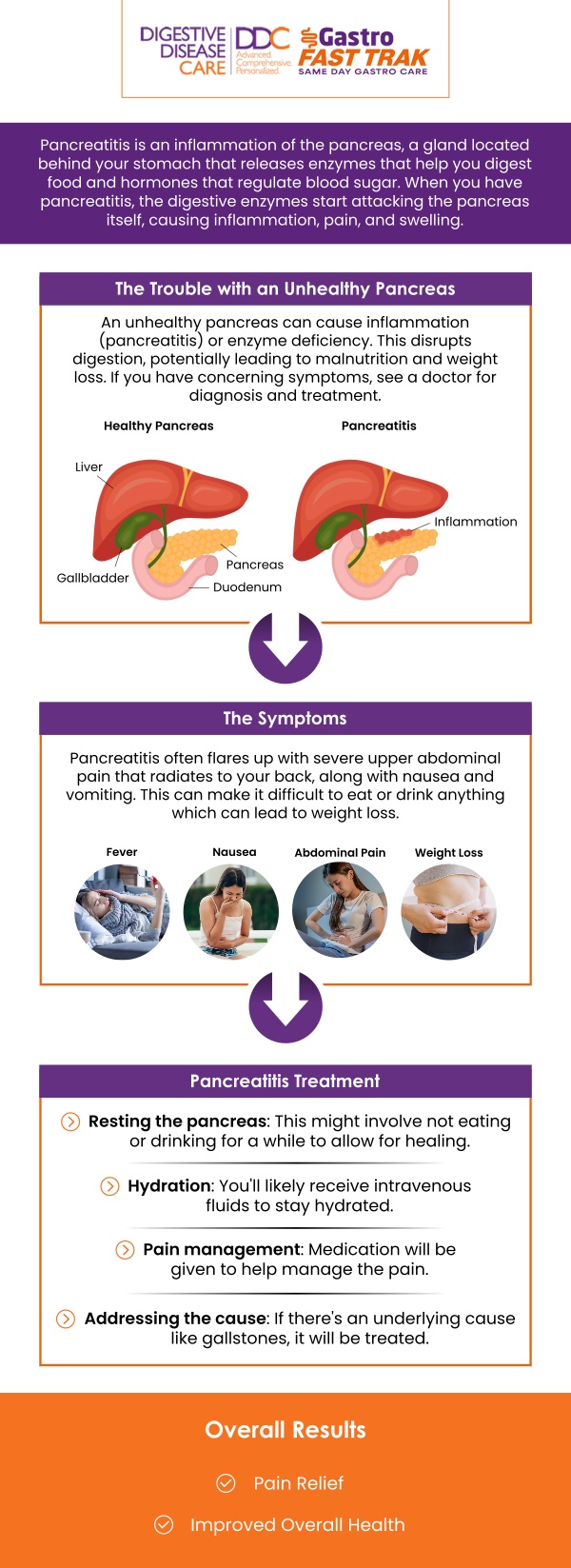
Table of Contents:
What are the early warning signs of pancreatitis?
When should I seek medical help for abdominal pain from pancreatitis?
How can I differentiate between pancreatitis pain and other stomach problems?
How is pancreatitis diagnosed in the early stages?
Early Pancreatitis Symptoms: How to Identify Them with Dr. Preeti Mehta in East Setauket, NY
Pancreatitis often starts with symptoms that feel more serious than a simple stomachache. The pancreas helps with digestion, so when it becomes inflamed, the body may react with severe upper abdominal pain and digestive distress. Early symptoms can appear suddenly and may feel harder to ignore than common stomach discomfort.
• Severe upper abdominal pain:
One of the earliest signs is pain high in the abdomen. It often feels deep, steady, and harder to ignore than common indigestion.
• Pain that worsens after eating:
Many people notice the discomfort becomes stronger after meals. This happens because the pancreas is involved in digestion, and eating can make the irritated area more sensitive.
• Nausea and vomiting:
These symptoms often show up early. When stomach upset comes with upper abdominal pain, the problem may be more than a routine digestive issue.
• Fever or feeling sick overall:
Pancreatitis can make a person feel generally unwell. A fever, weakness, or a run-down feeling may appear as inflammation increases.
• Pain that feels unusually intense:
Pancreatitis symptoms are often stronger than gas, bloating, or an average stomach bug. That intensity is one reason early medical attention matters.
Early warning signs should not be brushed aside, especially when upper abdominal pain is paired with vomiting or fever. Dr. Preeti Mehta in East Setauket, NY helps patients understand whether their symptoms may point to pancreatitis and when prompt digestive evaluation is needed.
Abdominal pain from pancreatitis should be taken seriously because it may worsen quickly. Unlike brief stomach cramps or mild indigestion, pancreatitis pain is often persistent, intense, and difficult to relieve. Getting evaluated early can help prevent the condition from becoming more severe.
• Seek help when the pain is severe:
If the pain feels strong, deep, or constant, it should not be ignored. Pancreatitis pain is often much more intense than common digestive discomfort.
• Get evaluated if the pain lasts for hours:
Ongoing pain that does not ease with rest deserves prompt attention. Waiting too long can delay diagnosis and treatment.
• Do not ignore nausea or vomiting with pain:
Repeated nausea or vomiting along with abdominal pain may suggest inflammation rather than a simple stomach upset.
• Fever is another reason to seek care:
Abdominal pain with fever may be a warning sign that the body is reacting to a more serious condition.
• Pain after meals should be checked:
If eating makes the discomfort worse, that pattern can fit pancreatitis and should be discussed with a specialist.
• Seek help sooner if you feel very unwell overall:
Weakness, rapid heartbeat, or a strong sense that something is wrong should not be ignored.
Abdominal pain from pancreatitis is not something to watch for too long at home when symptoms are severe or ongoing. Dr. Preeti Mehta in East Setauket, NY, and the Digestive Disease Care team help patients get timely evaluation when abdominal pain needs specialist attention.
Pancreatitis pain often stands out because it feels stronger and more persistent than many other stomach problems. A typical stomachache may come and go, improve after rest, or feel crampy and scattered. Pancreatitis pain is more likely to stay in the upper abdomen and be paired with other symptoms that make the illness feel more serious.
• The location is usually upper abdominal:
Pancreatitis pain commonly centers high in the abdomen. Other stomach issues may feel lower, shift around, or come with more cramping than pressure.
• The pain is often deeper and more severe:
Many stomach problems cause discomfort, but pancreatitis is more likely to cause a steady, intense pain that feels harder to tolerate.
• Eating may make it worse:
If the pain clearly increases after food, pancreatitis becomes a stronger possibility because the pancreas is active during digestion.
• Other symptoms often appear together:
Nausea, vomiting, fever, and feeling very unwell can point toward pancreatitis rather than simple indigestion.
• It usually does not go away quickly:
Gas pain or mild stomach irritation may settle with time, but pancreatitis pain often lingers and may keep worsening.
• It can still overlap with other GI conditions:
Gallbladder issues, ulcers, or other upper digestive problems can sometimes feel similar, which is why proper testing matters.
The difference between pancreatitis pain and other stomach problems is often found in the pattern, severity, and accompanying symptoms. Dr. Preeti Mehta in East Setauket, NY helps patients move beyond guessing by evaluating abdominal pain carefully and determining whether pancreatitis or another digestive condition may be involved.
Early pancreatitis is diagnosed by looking at symptoms together with medical testing. Doctors do not rely on pain alone because many digestive conditions can cause upper abdominal discomfort. Instead, they review how the pain started, how severe it is, and whether symptoms such as nausea, vomiting, or fever are also present.
• A symptom review is the first step:
The doctor asks about where the pain is located, whether it worsens after eating, and how long the symptoms have lasted.
• A physical exam helps guide next steps:
Exam findings can help determine whether the pain pattern fits pancreatitis or another digestive condition.
• Blood tests are often part of early diagnosis:
Blood work can help detect inflammation and support the diagnosis.
• Imaging may be used when needed:
Ultrasound, CT, or MRI can help doctors look more closely at the pancreas and nearby organs. These tests can also help rule out other possible causes.
• Other digestive problems may need to be ruled out:
Because abdominal pain can come from several causes, diagnosis often involves checking for conditions that can mimic pancreatitis.
• Early testing helps direct treatment faster:
The sooner the cause is identified, the sooner the care plan can be tailored to the patient’s needs.
Early-stage pancreatitis is usually identified through a careful combination of symptoms, examination, blood tests, and imaging. Dr. Preeti Mehta in East Setauket, NY helps patients get evaluated before symptoms become harder to manage, with support from the Digestive Disease Care team and access to timely diagnostic tools.
Early pancreatitis symptoms may feel sudden, intense, and clearly different from routine digestive discomfort. Because the pancreas is closely tied to digestion, inflammation in this organ can quickly affect how the stomach and upper abdomen feel. Recognizing the pattern early can help patients seek care before the condition becomes more serious.
• Notice severe upper abdominal pain:
This is one of the clearest signs. The pain may feel deep, steady, and more intense than a typical stomachache.
• Watch for pain after eating:
Symptoms that get worse after meals can be an important clue that the pancreas is involved.
• Pay attention to nausea and vomiting:
These symptoms often appear early and can make the illness feel much more serious than ordinary indigestion.
• Do not overlook fever or overall illness:
Feeling feverish, weak, or unusually sick can signal inflammation that needs prompt attention.
• Notice when the symptoms do not let up:
Pancreatitis symptoms tend to persist rather than quickly fade. That ongoing intensity is an important warning sign.
• Get checked when the symptoms feel different from a normal stomach problem:
If the pain is severe, the nausea is worse, or the illness feels more serious than usual, medical evaluation is the safer next step.
Recognizing early pancreatitis symptoms can help patients seek treatment before the condition becomes more severe. Dr. Preeti Mehta in East Setauket, NY and the Digestive Disease Care team provide compassionate evaluation to help patients get answers and the right next steps for their digestive health. For more information, contact us today or schedule an appointment online. We are conveniently located at 235 N Belle Mead Rd, Setauket- East Setauket, NY 11733. We serve patients from East Setauket NY, Miller Place NY, Nesconset NY, Farmingville NY, Stony Brook NY, Selden NY and surrounding areas.

Check Out Our 5 Star Reviews


Additional Services You May Like

Additional Services You May Like
- Abdominal Pain
- Acid Reflux
- Barretts Esophagus
- Bloating
- Capsule Endoscopy
- Celiac Disease
- Colon Cancer Screening
- Colonoscopy
- Constipation
- Crohns Disease
- Diarrhea
- Diverticulitis
- Esophageal PH Monitoring
- Fatty Liver
- Fibroscan
- Gallstones
- Gastroenterologist
- Gastric Chest Pain
- Gluten Intolerance
- Hemorrhoid
- Hemorrhoid Banding
- Hepatitis
- Irritable Bowel Syndrome
- Lactose Intolerance
- Pancreatitis
- Polyps
- Rectal Bleeding
- Stomach
- Ulcerative Colitis
- GI Urgent Care


 Send Text
 How May I Help You?